
Discover 10 best free datasets for data science projects. Perfect for beginners to practice data analysis, machine learning, and real-world data science skills.
Tutorials and textbooks are excellent places to start when learning data science, but theory by itself cannot develop true analytical abilities.
Only when applied to real datasets do concepts like data cleaning, visualization, and machine learning techniques have true significance.
Working with real-world data exposes you to problems like missing values, inconsistent formats, outliers, and noisy data that are uncommon in theoretical instances.
You can learn how data behaves in real-world situations by practicing with actual datasets.
You learn how to examine, clean, transform, and analyze complex data rather than nicely organized sample data. Your ability to solve problems and your understanding of analytical methods are reinforced by these practical experiences.
Building a portfolio is yet another significant benefit. Employers in data science frequently search for real-world projects rather than only credentials.
You may show that you have the skills necessary to become a successful data scientist by studying real datasets and sharing your work on websites like GitHub or Kaggle. These abilities include extracting insights, building models, and communicating results.
10 Best Free Datasets for Data Science Projects to Practice
1. Titanic Passenger Survival Dataset
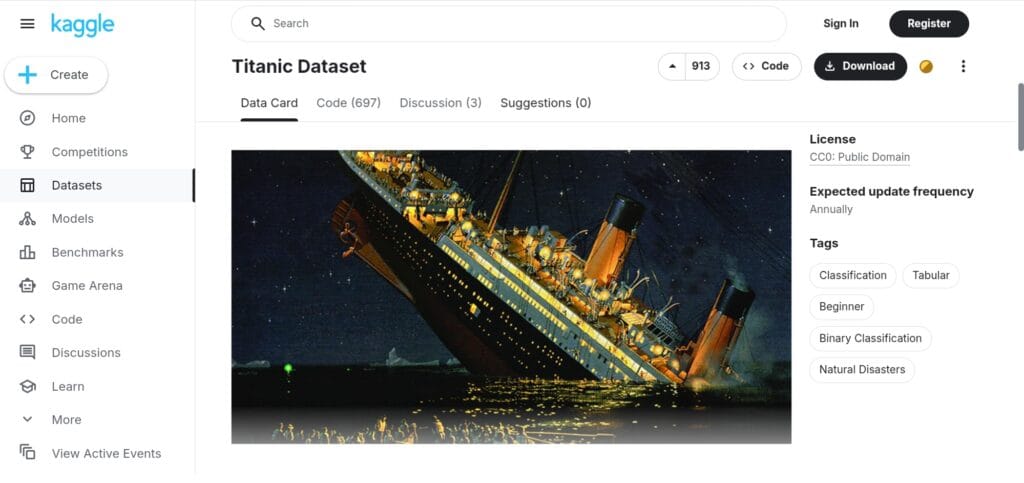
One of the most popular starting datasets in data science and machine learning is the Titanic dataset. It includes details about travelers on the RMS Titanic, including whether or not they survived the catastrophe.
Features like age, gender, passenger class, ticket fare, and port of embarkation are included in each row, representing a single person.
The dataset typically contains around 891 passenger records and 12 features, including variables like PassengerId, Survived, Pclass, Sex, Age, Fare, SibSp, Parch, Cabin, and Embarked.
The dataset gives novices a great chance to learn how real-world data behaves and how to prepare it for analysis or machine learning models because it comprises both numerical and categorical data as well as missing values.
2. Iris Flower Dataset
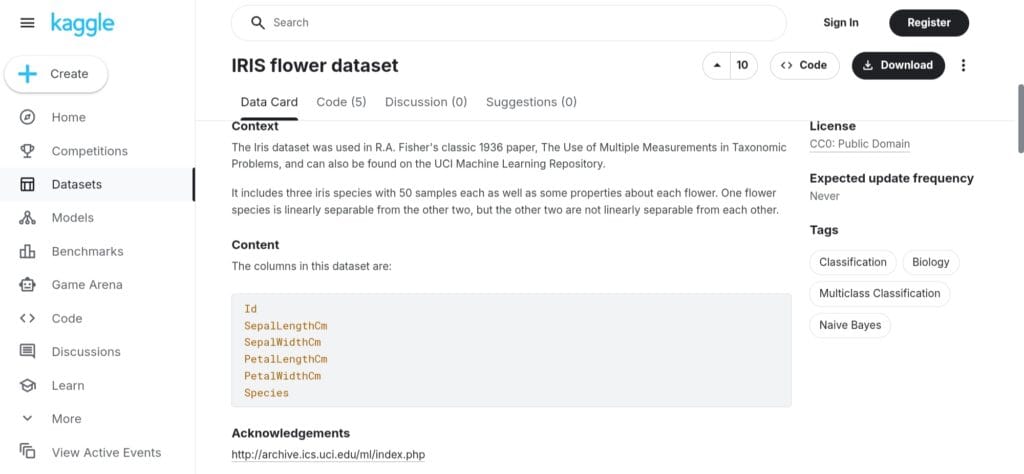
In data science and machine learning, one of the most well-known starter datasets is the Iris Flower dataset. It was first presented by statistician Ronald Fisher in 1936 and has since grown to be a standard illustration of classification methods and exploratory data analysis.
The collection includes 150 observations of iris flowers from three distinct species: Iris virginica, Iris versicolor, and Iris setosa. Four numerical features, petal length, petal width, sepal length, and sepal width, are included in each observation to characterize the flower’s physical attributes.
The dataset is frequently referred to as the “hello world” dataset for machine learning due to its small size, cleanliness, and organization. It enables novices to practice basic data science methods while rapidly comprehending how data attributes relate to categorization challenges.
Also Read: How to Do Feature Engineering in Machine Learning: Step-by-Step Tips for Better Results
3. Netflix Movies and TV Shows Dataset
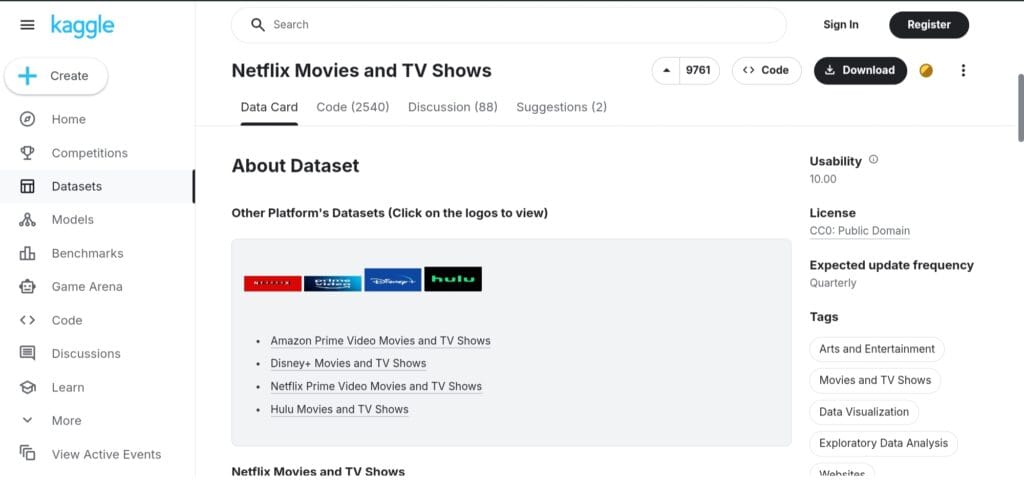
The Netflix Movies and TV Shows dataset includes comprehensive details about the movies that are accessible on the Netflix platform. Along with metadata like title, director, cast, country of origin, release year, runtime, rating, genre, and description, it contains both films and television series.
The dataset is a useful source for examining trends in the streaming market because it contains more than 8,000 records that represent material that Netflix has listed.
Beginners can examine how material libraries change over time with the use of each entry’s helpful qualities, which include type (movie or TV show), date introduced to Netflix, genre categories, and runtime.
The dataset is especially helpful for practicing data analysis and comprehending real-world entertainment data since it integrates textual and category information.
4. Housing Prices Dataset
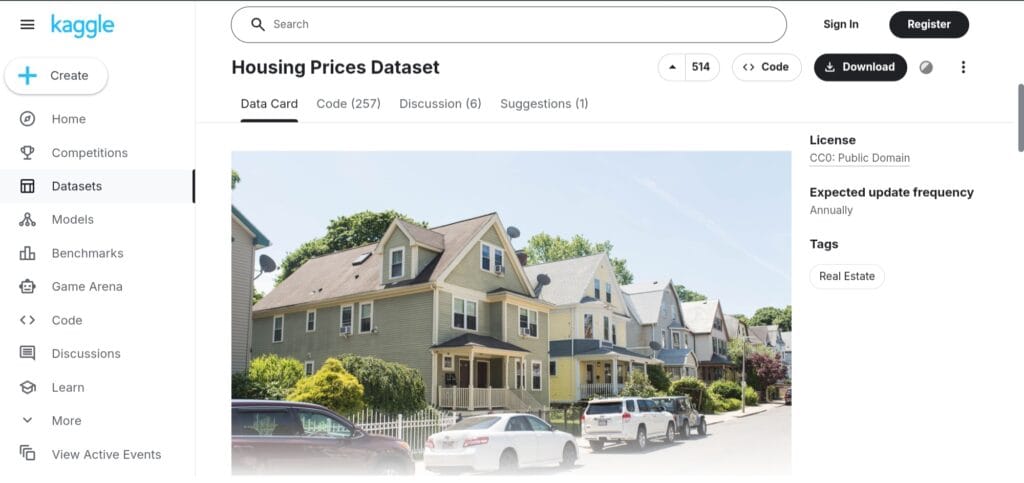
Regression analysis and predictive modeling are frequently taught using the Housing Prices dataset, which is an easy-to-use dataset. It includes organized data on residential properties and the variables affecting their market values.
Features like space, number of bedrooms, number of bathrooms, number of stories, parking availability, and luxuries like air conditioning are all included in each row, which represents a house.
Using this dataset, the main objective is to forecast a home’s price depending on its attributes. Data scientists can create models that estimate house values by examining the correlation between a property’s attributes and sale price.
The dataset is ideal for beginners who wish to comprehend how real estate elements impact price and how predictive models are constructed in real-world situations because it includes both numerical and categorical variables.
Also Read: Data Cleaning Tools You Should Know (Free & Paid Options)
5. Google Play Store Apps Dataset
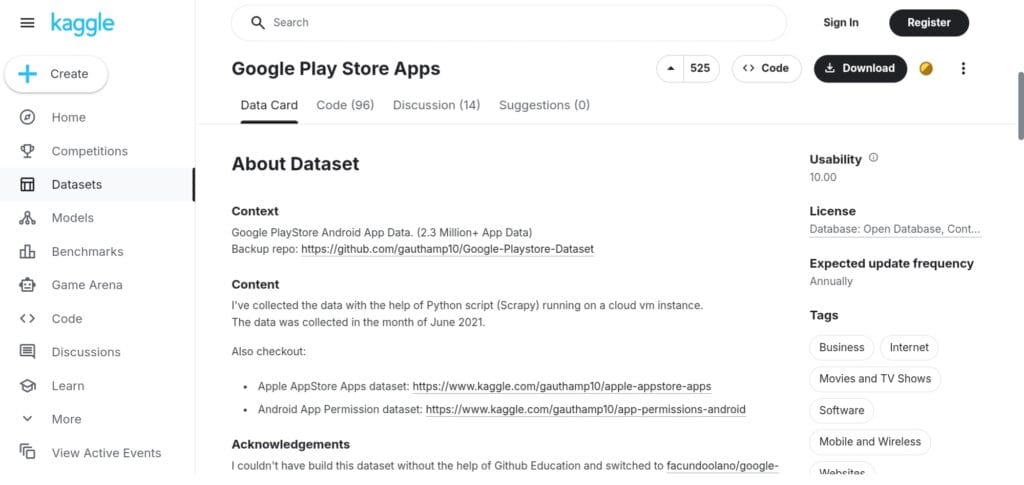
The Google Play Store Apps dataset contains precise information about the programs accessible in the Android app store.
It contains metadata for thousands of apps, including attributes such as app name, category, user rating, number of reviews, app size, installation count, pricing, content rating, and supported Android version.
A widely used version of the dataset includes over 10,000 apps and approximately 13 important attributes, making it excellent for researching the mobile app ecosystem.
Beginners can use the dataset to investigate how various parameters, such as app category, price strategy, and number of installs, affect user reviews and platform popularity.
The dataset, which includes both numerical and categorical characteristics, provides a realistic context for learning how data scientists examine product performance and user behavior in digital marketplaces.
6. World Happiness Report Dataset
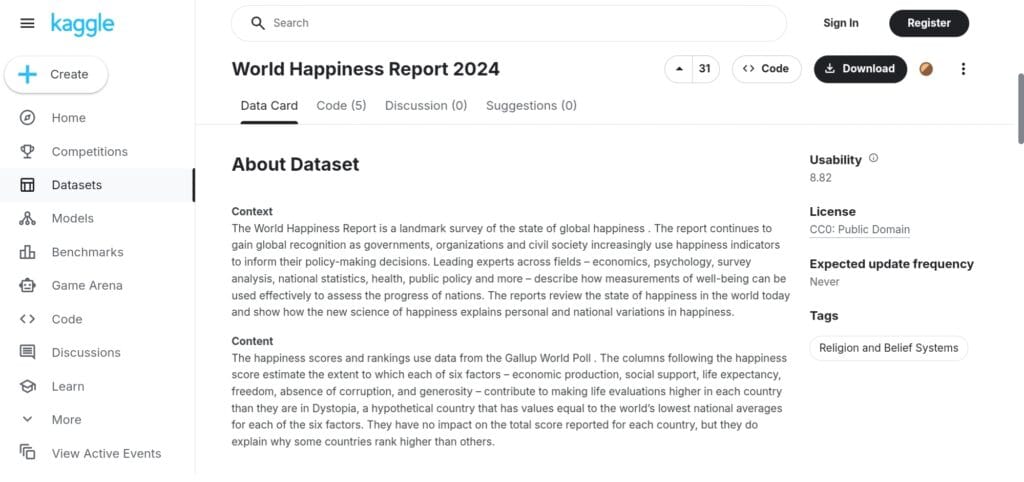
The World Happiness Report 2024 dataset offers information on how people in various nations assess their quality of life.
In addition to a number of socioeconomic factors that help explain why some countries report higher levels of well-being than others, it contains happiness rankings and scores for over 150 countries.
Key variables in the dataset typically include GDP per capita, social support, healthy life expectancy, freedom to make life choices, generosity, and perceptions of corruption. These factors are used to understand how economic conditions, social systems, and governance influence happiness levels worldwide.
The dataset is frequently used in data science and policy research to examine trends in global well-being and contrast how other nations fare in terms of life satisfaction since it integrates economic, social, and demographic characteristics.
Also Read: Data Science Courses On Coursera To Help Land Your First Job
7. COVID-19 Global Dataset
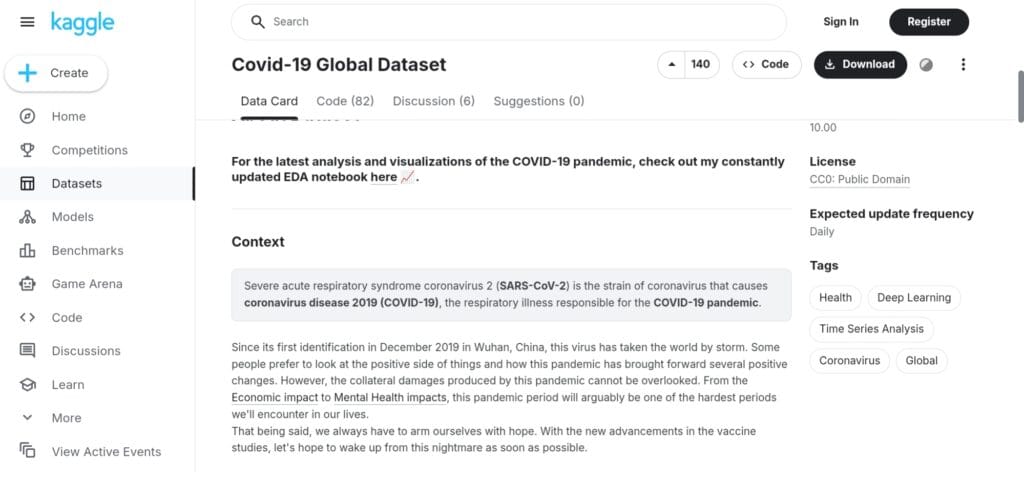
The COVID-19 Global Dataset offers extensive information on the global spread of the coronavirus pandemic. It includes daily data for over 200 nations, including important indicators like active cases, deaths, recoveries, and confirmed cases.
Users are able to monitor how the pandemic evolved historically because each record usually depicts the state of a nation on a particular date.
The dataset is especially helpful for examining patterns, comparing nations, and comprehending how infection rates varied over the course of the pandemic because it contains time-series data.
This dataset provides a practical chance for novices to deal with extensive worldwide data that represents actual public health incidents. It also shows how data science methods may be used to investigate worldwide phenomena, including death patterns, recovery rates, and disease transmission.
8. YouTube Trending Video Dataset
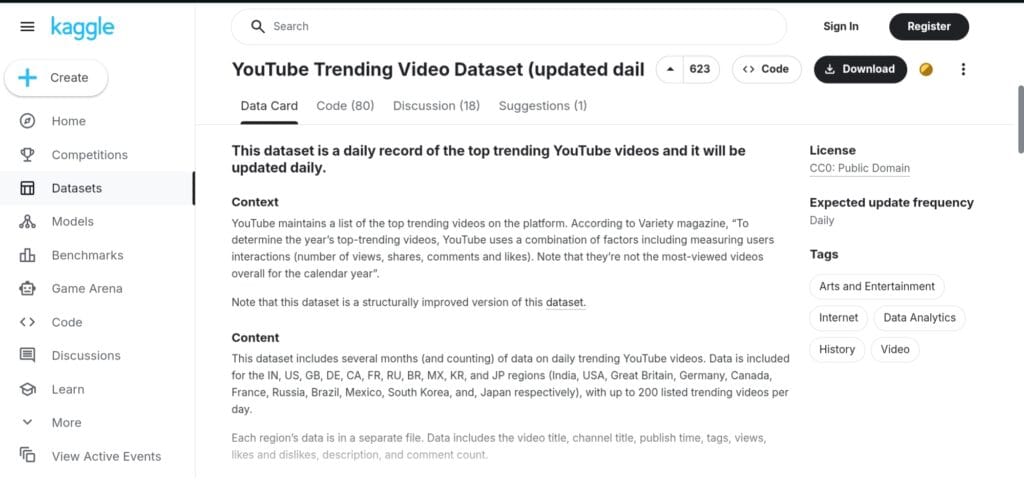
The YouTube Trending Video Dataset includes daily logs of videos that show up on YouTube’s trending page in various nations.
Up to 200 trending videos are captured daily for each region in the collection, which includes data on popular videos from the US, Canada, India, Germany, France, Japan, and other countries.
The video title, channel name, publication time, tags, category, view count, likes, dislikes, comment count, and description are just a few of the comprehensive metadata that are included in each entry.
The dataset represents actual interaction metrics from one of the biggest video platforms worldwide since it was gathered utilizing the YouTube API.
This dataset is an excellent resource for practicing real-world data analysis and is particularly helpful for novices interested in examining social media trends, audience engagement, and content popularity.
9. Retail Sales Dataset
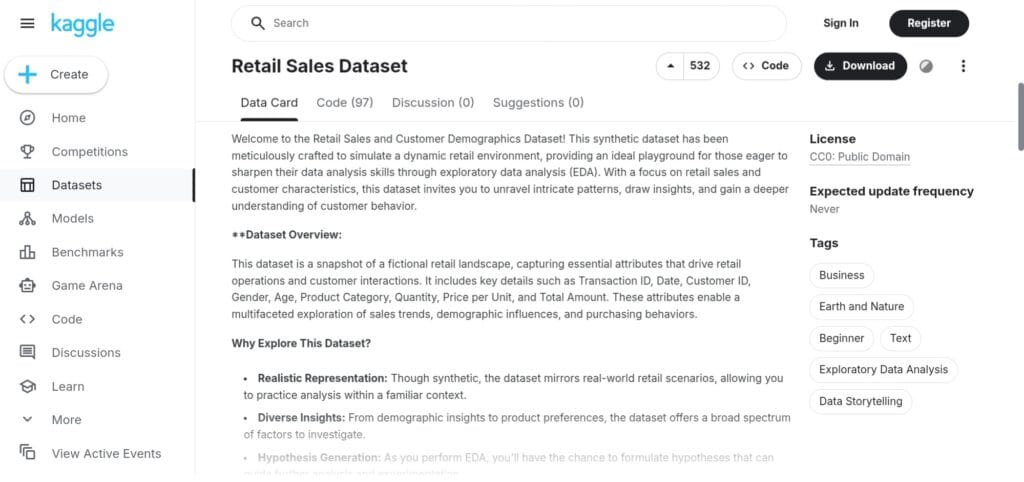
The Retail Sales Dataset offers transactional data that mimics how consumers make purchases in a retail setting.
Each single purchase record includes important details like transaction ID, date, consumer ID, gender, age, product category, quantity purchased, price per unit, and total transaction amount.
With about 1,000 sales records, the dataset is manageable for novices while still providing sufficient information to examine actual purchase trends.
The dataset enables learners to investigate how various factors impact consumer spending behavior by merging product and pricing data with customer demographics.
This dataset is perfect for comprehending how companies utilize data to analyze sales performance and consumer preferences because it depicts typical retail operations, such as product purchases, customer segmentation, and revenue creation.
Also Read: Best Data Analytics Courses Online [Top Picks]
10. Airbnb Listings Dataset
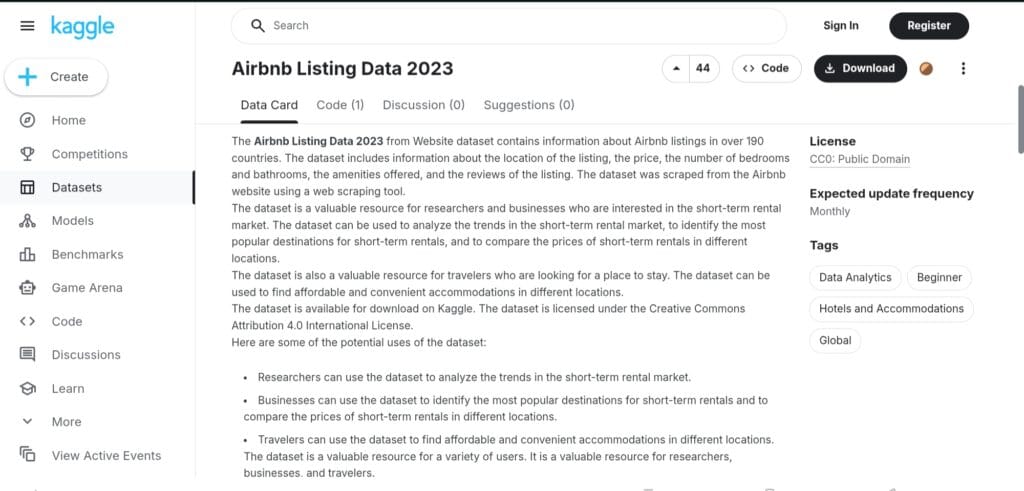
The Airbnb Listings dataset offers comprehensive details about properties that are offered for short-term rentals on the Airbnb platform. The property’s location, listing price, number of bedrooms and baths, available facilities, and user reviews are all included.
Because each record represents a distinct property listing, analysts can investigate the effects of various features on rental pricing and guest demand, including neighborhood, property type, room capacity, and amenities.
The dataset captures actual market dynamics from the short-term rental sector, where location, property size, and available amenities all affect pricing and appeal.
The dataset is especially helpful for beginners understanding how real estate and travel data can be evaluated using data science approaches because it contains both numerical variables (price, number of rooms) and categorical factors (property type, neighborhood, amenities).
FAQs About Data Science Datasets
Where can beginners find free datasets for data science?
Beginners can find free datasets from several reliable platforms that host publicly available data for analysis and machine learning practice. Popular sources include Kaggle, government open data portals, academic research repositories, and organizations that publish public datasets.
Are Kaggle datasets good for data science practice?
Yes, Kaggle datasets are widely considered one of the best resources for practicing data science. The platform offers a large collection of datasets covering topics such as machine learning, natural language processing, image recognition, and business analytics.
What is the best dataset for a beginner data science project?
For beginners, the best datasets are those that are relatively small, structured, and easy to understand. Classic datasets like the Titanic dataset, Iris dataset, and housing price datasets are commonly recommended because they allow learners to focus on understanding data analysis techniques rather than dealing with extremely complex data structures.
Do data science projects require large datasets?
Not necessarily. Many beginner data science projects can be successfully completed using small or medium-sized datasets. In fact, starting with smaller datasets can be beneficial because they are easier to explore, clean, and visualize.
How do I choose a dataset for machine learning practice?
When choosing a dataset for machine learning practice, it is helpful to start with a clear objective. Select datasets that have well-defined features and a target variable you want to predict. Beginners should prefer datasets that include both numerical and categorical variables, as this helps practice different preprocessing techniques. It is also useful to choose datasets related to topics you find interesting, such as movies, housing, health, or social media, because meaningful context makes the analysis process more engaging and easier to understand.
Conclusion
One of the best methods to develop good data science skills is to practice with actual datasets. Real learning occurs when you deal with real data, whereas tutorials and courses explain the theory underlying algorithms and analytical procedures.
Beginners can play with tools like Python and Pandas, investigate real-world issues, and gain a practical understanding of data cleaning, analysis, and modeling with free datasets.
For novices, the datasets in this guide offer a great place to start. Every dataset provides a different chance to develop practical skills, from forecasting passenger survivability with the Titanic dataset to examining streaming trends with Netflix data or creating price prediction models with housing datasets.
The important thing is to act. Select a dataset, specify a straightforward problem to be solved, and begin examining the data. Make visualizations, conduct exploratory analysis, and attempt to develop a simple machine learning model.
Document your work and post it on websites like GitHub or Kaggle as you finish new projects. These projects will eventually build a solid portfolio that shows off your actual data science skills.
Share Now

More Articles
Roadmap to Become A Data Scientist In 6 Months (Step-by-Step Guide)
Data Analyst Vs Data Scientist Vs ML Engineer: Which Role is Right for You?
Building A Career in AI: Skills and Certifications Needed

As an engineer with a passion for learning and sharing knowledge, I created CourseKart.online to help students, professionals, and lifelong learners choose the best online courses. With so many options available, finding the right one can be overwhelming. My goal is to simplify that process by offering insights, reviews, and recommendations on the top online learning resources. I hope my posts inspire you to keep growing, learning, and exploring new opportunities.
Discover more from coursekart.online
Subscribe to get the latest posts sent to your email.