

Every business operating in the data-driven economy of today is searching for more intelligent ways to make decisions, reduce expenses, and boost revenue. Machine learning has rapidly emerged as one of the most effective instruments for accomplishing those objectives.
Businesses are utilizing data to generate revenue more quickly than ever before, from anticipating what consumers will want next to identifying fraud before it occurs.
The article discusses five real-world machine learning use cases that are redefining business operations and, more significantly, boosting revenue.
You will explore how machine learning is being used across sectors to address common business problems, such as marketing, sales, logistics, risk management, and more, rather than delving into intricate algorithms or technical theory.
In short, you will have a better understanding of how these machine learning business use cases result in quantifiable financial effects, be inspired by real-world examples, and find concepts that you can modify for your own company.
These insights will assist you in understanding how AI use cases in business convert innovation into growth, regardless of whether you are the leader of a startup or a huge corporation.
What Makes Machine Learning a Revenue Driver?
Machine learning is a useful tool that helps companies transform raw information into decisions that have a direct effect on profits. Traditional analytics is based on static reports and pre-established rules.
In contrast, machine learning learns patterns from data, makes predictions, and becomes better over time.
Machine learning helps businesses make data-driven predictions, automate complex processes, and personalize experiences at scale.
Making data-driven predictions means you can estimate customer demands, recognize high-value leads, and forecast potential risks before they actually happen.
Repetitive tasks, such as fraud detection and inventory management, waste your team’s time and resources. Machine learning can handle these tasks faster and more accurately, allowing your team to focus on more important activities.
Once you have your customer data, you can customize pricing, marketing messages, and product recommendations for individual customers, offering personalized experiences. This will increase conversions and customer loyalty.
Traditional analytics and machine learning differ greatly from one another. Analytics uses past data to inform you what happened, but machine learning forecasts future events and even recommends the best course of action.
Businesses can boost revenue, decrease losses, and grasp opportunities more quickly because of this forward-thinking skill.
Machine learning is a vital tool for modern business growth since it will enable organizations to transform routine operational data into a strategic revenue driver.
Use Case 1 – Personalized Marketing & Customer Segmentation

Personalized marketing and customer segmentation are two of the most significant real-world machine learning use cases. In the past, companies used broad demographic categories to target customers, such as age, region, or past purchases.
Although this strategy was somewhat successful, it frequently overlooked the minor preferences and behaviors that influence engagement and sales.
By examining enormous volumes of consumer data, machine learning alters the rules by identifying patterns that are difficult for people to see.
How it works
Machine learning algorithms categorize consumers into extremely specific groups by analyzing data from a variety of sources, including website visits, past purchases, social media interactions, and even browsing habits.
Beyond simple demographics, these segments offer predictive data, such as which customers are most likely to purchase a product, which are at risk of churning, or which could react best to a special offer.
Businesses can offer personalized experiences at scale after these categories have been identified.
For instance, machine learning is used by e-commerce sites, such as Amazon, to suggest products that are tailored to the preferences of each customer, boosting the probability of a purchase.
Netflix uses comparable strategies to make movie and television show recommendations based on customer viewing preferences, which maintains strong user engagement and devoted subscribers.
Machine learning algorithms can be used by even tiny online stores to deliver product recommendations or targeted email campaigns, increasing conversion rates without requiring human guesswork.
The impact on business is obvious: businesses can greatly boost revenue, customer loyalty, and lifetime value by connecting with the appropriate audience at the right moment with the right message.
This makes customer segmentation and tailored marketing a potent machine learning application that generates revenue and should be taken into account by any company that uses digital consumer interactions.
Use Case 2 – Predictive Sales Forecasting
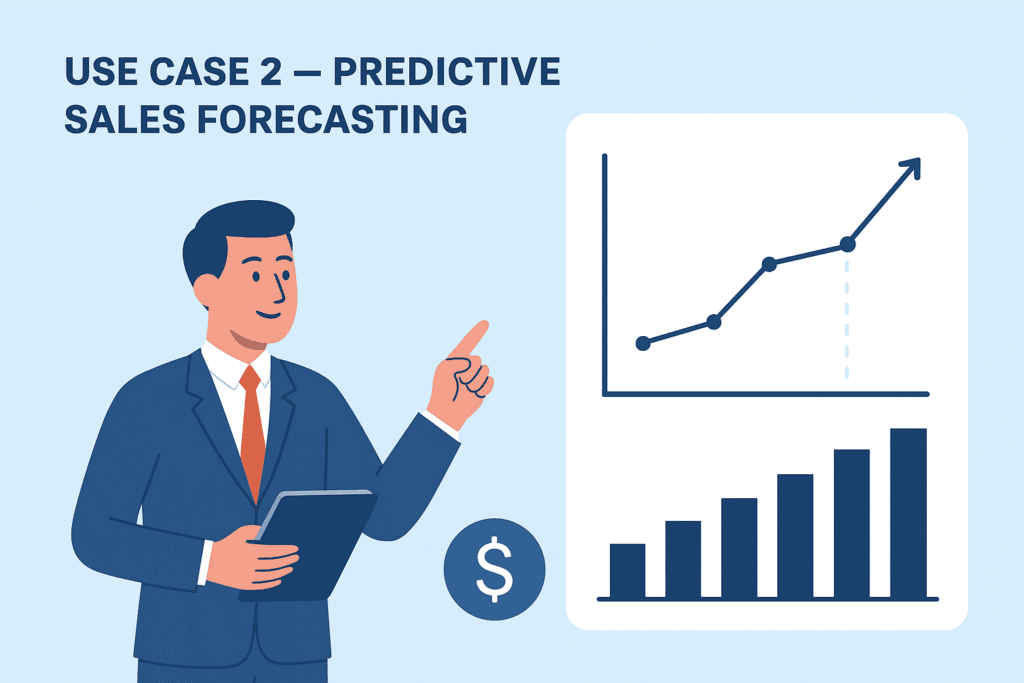
Predictive sales forecasting is another excellent real-world machine learning use case that aids companies in anticipating demand, optimizing inventory, and avoiding revenue loss.
Seasonality, market trends, and abrupt changes in consumer behavior are frequently overlooked by traditional sales forecasting, which is based on historical data and linear models. In contrast, machine learning can make much more accurate predictions by analyzing complicated datasets in real time.
How it works
Machine learning models analyze past sales data as well as outside variables like economic indicators, industry trends, advertising activities, and even sentiment on social media.
The algorithms can estimate demand at a fine level, such as by product, region, or client group, by scanning this data for patterns and correlations. These forecasts enable companies to proactively decide on resource allocation, manufacturing scheduling, and inventory control.
Predictive sales forecasting in retail keeps slow-moving items from being overstocked while guaranteeing that popular products are always available.
Large retailers like Walmart and Target, for example, use machine learning to optimize inventory across thousands of stores, lowering storage costs and avoiding lost sales.
Predicting subscription renewals or spotting possible customer attrition helps SaaS companies target clients with retention campaigns before revenue is lost.
Improved product availability results in increased revenue, and improved inventory management lowers expenses. Predictive forecasting can help firms make better judgments, steer clear of expensive mistakes, and obtain a competitive advantage in the marketplace.
Use Case 3 – Fraud Detection & Risk Reduction

The revenue and reputation of a corporation can be rapidly undermined by fraudulent transactions and operational dangers.
Fraud detection and risk reduction are among the most important real-world machine learning use cases. These applications assist companies in spotting suspicious activity in real time and averting losses before they happen.
Organizations are exposed because traditional rule-based systems frequently miss complex or changing fraud patterns. Machine learning provides a more intelligent, flexible method.
How it works
In order to identify irregularities and trends that can point to fraud, machine learning algorithms examine vast amounts of transactional and behavioral data.
Unlike static rule-based systems, these models are constantly learning from fresh data and can quickly adjust to new threats.
For instance, abnormal purchase amounts, strange login locations, or inconsistent user activity might all be flagged by the algorithms for more scrutiny.
The most common users of this technology are banks and payment gateways. Businesses such as Visa and PayPal employ machine learning to track millions of transactions daily and identify fraudulent activity instantly.
This proactive strategy safeguards client trust, which is crucial for long-term revenue retention, in addition to preventing immediate financial losses.
Beyond banks, machine learning is used by insurance providers, e-commerce sites, and even subscription-based services to evaluate risk and stop misuse, such as refund fraud and account takeovers.
Significant reduction in revenue leakage, increased operational effectiveness, and increased customer confidence are the outcomes.
In today’s fast-paced digital economy, firms can turn a historically reactive procedure into a proactive revenue-protection strategy by utilizing fraud detection and risk reduction.
Use Case 4 – Recommendation Engines & Dynamic Pricing
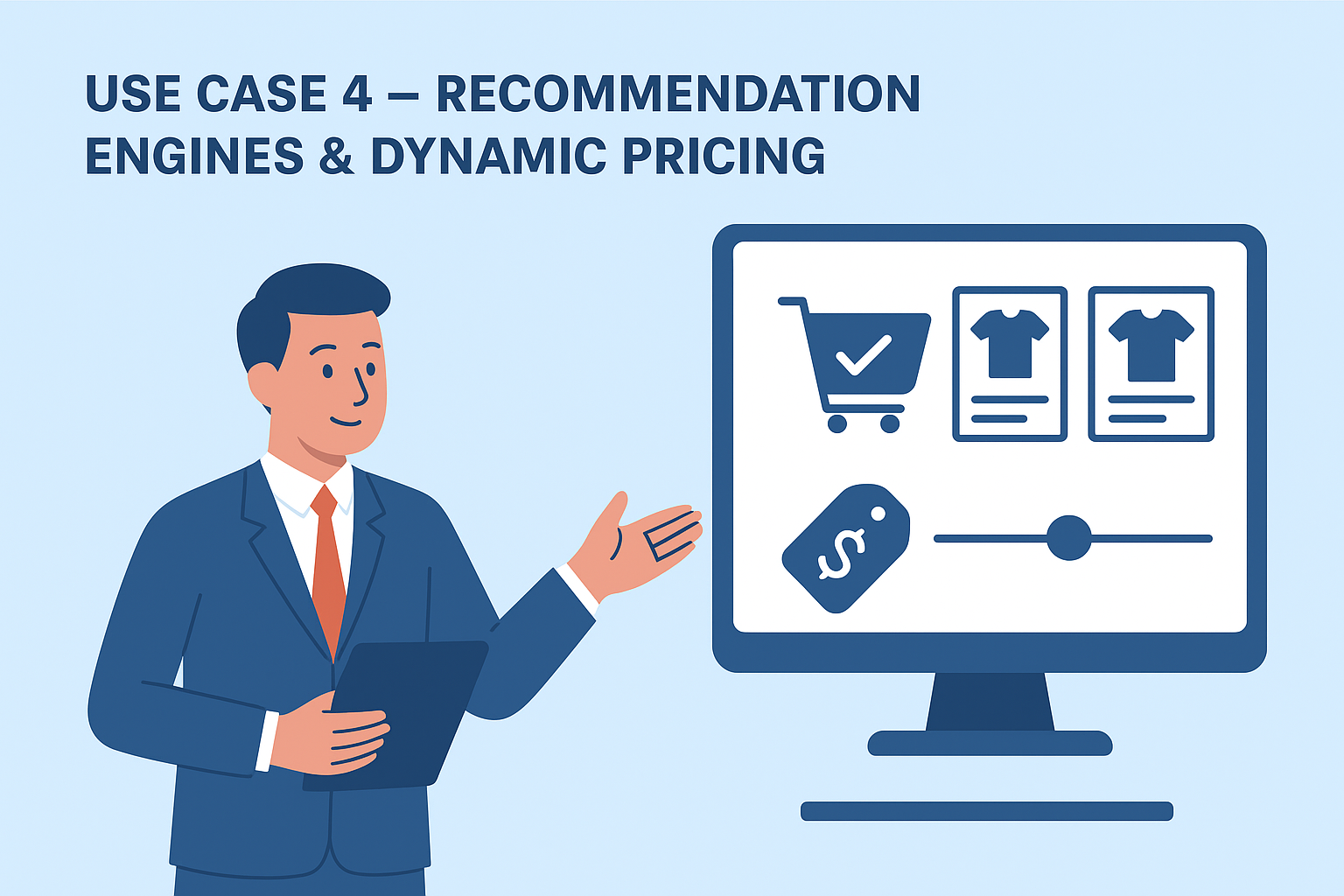
Another real-world machine learning use case that directly increases revenue is recommendation engines and dynamic pricing.
Sales margins and customer happiness can be greatly impacted by providing the right product to the right consumer at the appropriate price in today’s competitive markets.
This can be accomplished at scale by organizations thanks to machine learning, which is significantly more capable than static product recommendations or manual pricing tactics.
How it works
In order to assess user behavior, past purchases, browsing habits, and even preferences deduced from comparable users, recommendation engines employ machine learning.
In order to provide a customized shopping experience, the system uses this data to anticipate which products a customer is most likely to interact with or buy.
To make real-time price adjustments, dynamic pricing algorithms, on the other hand, constantly assess market conditions, rival pricing, variations in demand, and consumer segments.
Recommendation engines are used in e-commerce by businesses such as Amazon to increase average order value by suggesting products, bundles, and specials that align with individual interests.
In order to maximize occupancy and income while maintaining competitiveness, the travel and hospitality sectors, which include airlines and hotel chains, use dynamic pricing to optimize room rates or flight tickets.
By promoting upsells, cross-sells, and quick purchases, the combination of personalization and adaptive pricing improves customer experience and boosts sales margins.
Companies can react quickly to shifting consumer behavior and industry trends by putting these machine learning technologies into place, transforming every interaction into a possible source of revenue.
Use Case 5 – Supply Chain Optimization & Efficiency
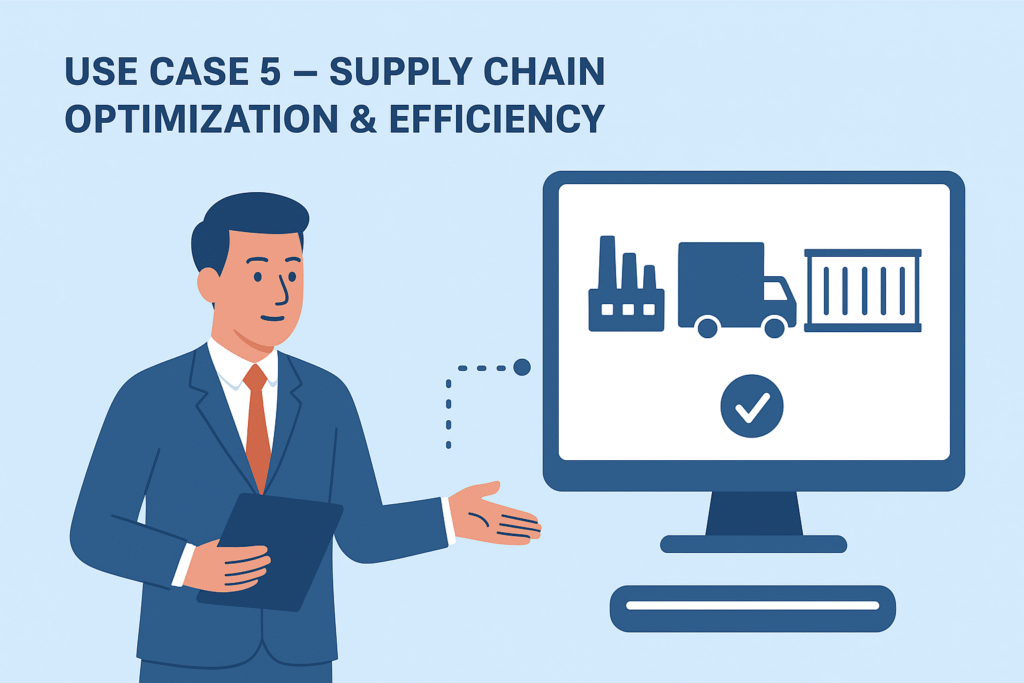
Profitability is heavily reliant on supply chain efficiency, and machine learning has become a major practical application for streamlining processes.
Machine learning enables firms to predict problems before they occur and make better decisions in real time, whereas delays, stockouts, overstock, and logistical inefficiencies can quietly drain revenue.
How it works
Machine learning algorithms examine past data from supplier performance, production lines, inventory levels, shipping logs, and outside variables like the weather, traffic, and market trends.
These technologies enable businesses to proactively manage resources, optimize routes, and guarantee that items reach clients on schedule by seeing trends and anticipating any delays.
Companies in manufacturing and logistics have experienced impressive outcomes. Predictive models are used by major manufacturers, for instance, to anticipate equipment breakdowns, minimizing production loss and downtime.
Logistics companies, such as FedEx or DHL, employ machine learning to forecast transit delays, balance warehouse inventories, and optimize delivery routes.
By guaranteeing that products are available when and where they are needed, these enhancements not only lower operating costs but also improve revenue efficiency.
Businesses can boost customer happiness, optimise workflows, and reduce waste by incorporating machine learning into supply chain operations.
These improvements result in higher profit margins and more consistent revenue streams. For businesses operating in dynamic marketplaces, supply chain optimization is therefore a revenue-driven, high-impact application of machine learning.
Challenges & Best Practices
It takes more than just selecting the appropriate algorithm or technology to successfully implement machine learning.
Businesses must solve real-world issues with data preparedness, model accuracy, and change management in order to guarantee quantifiable business impact, all while making sure that every activity is in line with revenue-driven objectives.
Data Readiness
Any machine learning project starts with data. Nonetheless, the majority of organizations deal with problems like inconsistent formats, missing data, or fragmented data systems.
For machine learning models to produce trustworthy insights, they require vast amounts of clean, accessible, and well-structured data.
Data pipelines that may update in real time must be maintained, sources must be consolidated, and duplication must be eliminated.
Machine learning projects are completed more quickly and accurately for organizations that make early investments in data quality and governance.
Read Also: Data Quality Explained – What It Is And Why You Should Care
Model Accuracy and Maintenance
Models can fail even with great data if they are not properly built or maintained. Preventing bias in training data, using appropriate methods, and regularly updating models with fresh data are all necessary for model accuracy.
Machine learning models must adapt to the constantly shifting market dynamics, consumer behavior, and competitive landscape. Retraining, validation, and performance monitoring on a regular basis guarantee that forecasts stay applicable and useful.
Read Also: What is Data Storytelling? A Guide to Turning Numbers into Narratives
Change Management
Traditional corporate operations are frequently disrupted when machine learning is introduced. Because they may misunderstand the technology or fear losing control, teams may be reluctant to embrace automatic recommendations.
The goal of machine learning and how it complements human decision-making rather than replacing it must be communicated clearly for change management to be effective.
Encouraging seamless adoption and sustained system confidence involves educating staff on how to interpret AI results and integrating machine learning tools into current workflows.
Aligning ML Initiatives with Revenue KPIs
In order to yield observable benefits, machine learning needs to be closely linked to measurable Key Performance Indicators (KPIs).
Every project should have a clear revenue-related objective, including improving conversion rates, decreasing churn, enhancing client retention, or optimizing pricing methods.
Before deployment, businesses should set up performance metrics, and they should periodically assess the results.
This alignment guarantees that investments in machine learning don’t just remain isolated technical experiments but instead directly contribute to growth.
Machine learning transforms from a complicated innovation into a useful revenue-generating tool that promotes efficiency, insight, and long-term competitive advantage when companies adopt best practices and handle these issues.
Conclusion
Machine learning has proven to be a powerful tool for businesses looking to drive revenue and improve efficiency. From personalized marketing and customer segmentation to predictive sales forecasting, organizations can leverage data to make smarter decisions, reduce waste, and increase conversions.
Additional uses for machine learning include supply chain optimization, fraud detection, and recommendation engines, which show how it may increase sales margins, safeguard revenue, and simplify processes.
These practical applications demonstrate that data-driven tactics directly contribute to business growth, highlighting the concrete effects of machine learning beyond theory.
The first step for companies prepared to take advantage of these advantages is to pinpoint high-potential areas of their operations and implement machine learning solutions that complement their revenue targets.
Explore your data, implement smart strategies, and take steps today to turn insights into measurable results.
FAQ
What are real-world machine learning use cases in business?
Supply chain optimization, fraud detection, recommendation engines, personalized marketing, and predictive sales forecasting are examples of real-world machine learning applications in business that increase productivity and profitability.
How does machine learning increase business revenue?
By facilitating data-driven decisions, forecasting consumer behavior, automating procedures, customizing experiences, lowering fraud, and streamlining operations to optimize sales and efficiency, machine learning boosts revenue.
Which industries benefit most from machine learning applications?
Machine learning is highly advantageous to e-commerce, retail, banking, SaaS, travel, hotel, manufacturing, and logistics. These industries use it for supply chain optimization, fraud detection, dynamic pricing, and marketing personalization.
How can small businesses leverage machine learning effectively?
Targeted solutions with low startup costs and tangible revenue effect, such as recommendation engines, sales forecasting tools, or customized email campaigns, are ideal for small firms.
What are the main challenges when implementing machine learning in business?
Managing organizational change, maintaining model accuracy, assuring high-quality data, and coordinating machine learning projects with quantifiable revenue-related KPIs are some of the primary challenges.
Share Now

More Articles
How to Transition into a Data Science Career from a non-tech background: Tips for Professionals
Soft Skills Every Data Scientist Needs to Succeed
Free Generative AI Courses On Udemy
Discover more from coursekart.online
Subscribe to get the latest posts sent to your email.