
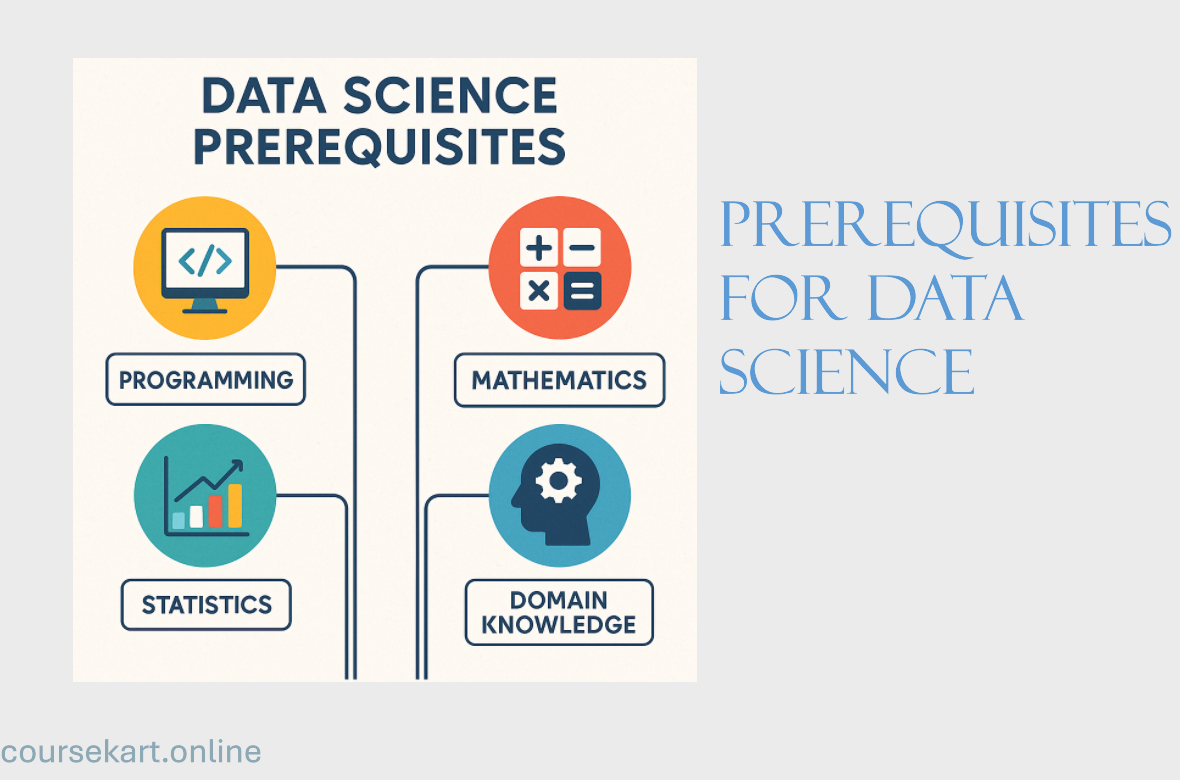
Data science is the field that converts unprocessed data into useful insights. It sits at the nexus of statistics, programming, and subject experience. With over 2.5 quintillion bytes of data being created every day in today’s digital environment, businesses are in dire need of qualified experts who can mine this enormous amount of data for insights. In 2025, demand will still be higher than supply, which explains why data science has been one of the most sought-after jobs since 2012.
Whether you are a professional contemplating a change in career, a college student planning your academic path, or just someone who is interested in the possibilities of data-driven decision-making, this article is designed with you in mind. People with a variety of backgrounds, including those in mathematics, computer science, economics, and even seemingly unrelated disciplines like psychology or linguistics, might pursue careers as data scientists.
After reading this post, you will have a solid understanding of:
- The fundamental technical abilities that serve as the basis for data science proficiency
- The mathematical ideas that you must grasp
- Tools and programming languages that should be included in the toolbox of every data scientist
- How to develop the mentality that sets great data scientists apart: critical thinking and problem-solving
- Steps you might take to get experience through projects and practical applications
- Resources and educational pathways designed for various beginning points
Regardless of your existing level of knowledge, we will concentrate on building blocks that you may methodically learn rather than presenting an intimidating list of criteria. In order to prepare you for success in the fascinating field of data science, let’s start by outlining the essential requirements.
Why Does Knowing the Prerequisites For Data Science Matter?
Builds A Solid Foundation
Consider trying to build a skyscraper without first laying a suitable foundation. The building might withstand a brief period of time before collapsing under its own weight. The same holds true for your journey into data science. It may be tempting to go right into cutting-edge algorithms or the newest deep learning frameworks, but if you don’t understand the basic ideas, you’ll probably find it difficult to understand why some strategies work—or, more crucially, why they occasionally fail.
A solid background in programming, mathematics, and critical thinking not only enables you to use pre-existing solutions but also fosters innovation and the development of new ones. Instead of continually catching up with every new tool or approach, you can adjust to the constantly changing data science landscape once you have a solid understanding of the underlying principles.
Helps Avoid Common Pitfalls
There are numerous cautionary tales of projects that failed because of basic misunderstandings in the data science field:
- Teams using complex algorithms on data that is not well-understood
- Models that were implemented without enough validation due to a disregard for fundamental statistical concepts
- Because practitioners had to master basic ideas while attempting to address complicated problems, several projects took months longer than necessary.
By making the effort to become proficient in the necessary skills up front, you avoid these typical mistakes. You’ll shield yourself from the awful “impostor syndrome” that many people who take shortcuts into the industry experience, avoid the frustration of implementing solutions you don’t fully grasp, and save endless hours of debugging.
There are no real shortcuts in data science, so keep that in mind. A strong foundation has typically been established by formal education or committed self-study for those who seem to advance quickly. By adhering to the requirements listed in this guide, you’re not holding down your progress but rather guaranteeing that you’ll reach your target with the self-assurance and skills required for long-term success.
Core Technical Prerequisites For Data Science
Mathematics and Statistics
Every statistical study, visualization method, and machine learning algorithm is based on mathematical ideas. Understanding fundamental mathematical ideas will help you go from being someone who just uses tools to someone who actually understands them, even though you don’t have to be a mathematician to be successful in data science.
A strong foundation in mathematics acts as your troubleshooting manual when you run into problems in your data science path, which you will. It benefits you:
- Learn the reasons behind a model’s poor performance.
- Choose the right algorithms for the different kinds of problems.
- Correctly interpret the results and steer clear of erroneous conclusions.
- When conventional techniques don’t work, come up with new ideas and ways.
- Confidently communicate with both technical and non-technical stakeholders.
Mathematics provides the “why” behind the “how” of data science methods. These mathematical concepts are one of the most worthwhile investments you can make in your data science education, even though technologies and platforms may change quickly.
Linear Algebra: The Language of Data Transformation
Many data science processes are built on linear algebra, especially when dealing with big datasets and intricate algorithms. Why it matters is as follows:
- Vectors and matrices provide the fundamental framework for effectively arranging and modifying data.
- From basic data conversions to intricate neural networks, matrix operations are the foundation of everything.
- When using dimensionality reduction techniques such as Principal Component Analysis (PCA), eigenvalues and eigenvectors are helpful.
- Support vector machines and linear regression are two examples of machine learning techniques that rely on linear transformations.
You can better comprehend why some algorithms function the way they do rather than viewing them as enigmatic black boxes if you have even a basic understanding of linear algebra ideas.
Top Linear Algebra Courses On Udemy
Linear Algebra For Data Science And Machine Learning A-Z 2025
Linear Algebra 40+ Hours Of Tutorials And Exercises
Linear Algebra For Data Science And Machine Learning In Python
Probability: Quantifying Uncertainty
The goal of data science is to make educated judgments in the face of uncertainty, not about absolute certainty. For this, probability theory offers the following framework:
- Modeling real-world occurrences and comprehending data properties are made easier with probability distributions.
- The basis for many classification methods and belief updating is Bayes’ theorem.
- Uncertain outcomes can be formally represented by using random variables.
- Prediction risk and dependability are measured with the aid of expected values and variation.
From simple sampling methods to complex Bayesian models, an understanding of probability is fundamental.
Top Probability Courses On Udemy
Become A Probability And Statistics Master
Probability And Statistics For Business And Data Science
Calculus: Understanding Change and Optimization
Even though you won’t frequently compute derivatives by hand, the following calculus concepts are essential:
- Derivatives, which are essential to gradient descent optimization, aid in understanding how changes in input impact outputs.
- We can optimize functions with numerous variables by using partial derivatives, such as cost functions in machine learning.
- For continuous distributions, integrals are useful in computing anticipated values and probabilities.
- Almost all machine learning model training is powered by optimization approaches developed from calculus concepts.
Even a basic familiarity with calculus will significantly enhance your comprehension of how models learn from data.
Top Calculus Courses On Udemy
Statistics: From Data to Insights
The foundation of data science is statistics, which provides crucial instruments for comprehending and interacting with data. Descriptive statistics help us make sense of complex datasets by summarizing important characteristics like variability and averages.
While hypothesis testing aids in confirming assumptions and evaluating the reliability of experimental findings, inferential statistics allows us to draw well-informed conclusions about larger populations from smaller samples.
Our estimations are contextualized by confidence intervals, which offer a measure of uncertainty, and regression analysis facilitates effective predictive modeling. In the end, statistical thinking gives data scientists a methodical, analytical approach that helps them solve problems and effectively share their findings.
Programming Skills
The theoretical underpinnings of data science are provided by mathematical principles, but the ability to program allows you to put these ideas into practice using actual data. Your efficacy as a data scientist will be directly impacted by your capacity to use code to manipulate, analyze, and visualize data.
Python: Data Science’s Swiss Army Knife
Python is now the most popular programming language in data science because it strikes a remarkable mix of readability, flexibility, and robust libraries. Among its advantages are:
Accessibility: Python has a smoother learning curve than many other programming languages because of its clear syntax and commands that are similar to those in English.
Versatility: Python can manage almost every data science task, from deep learning to data cleaning.
The Ecosystem: TensorFlow, Scikit-Learn, Pandas, NumPy, and PyTorch are just a few of the libraries that make up an extensive toolkit for data analysis, manipulation, and machine learning.
Community: The sizable Python community guarantees a wealth of tools, guides, and discussion boards for troubleshooting.
Using a single environment, such as Jupyter Notebooks, a typical Python data science workflow would include using Pandas to import data, NumPy to conduct numerical operations, Matplotlib or Seaborn to create visualizations, and Scikit-Learn to build models.
Top Python Courses On Udemy
100 Days Of Code: The Complete Python Pro Bootcamp
Python For Data Science And Machine Learning Bootcamp
The Ultimate Python Bootcamp: Build 24 Python Projects
R: The Powerhouse of the Statistician
R is still a favorite among statisticians and academics due to its unparalleled statistical analysis skills, even if Python has emerged as the preferred language for general-purpose data science.
R, which was created from the ground up with a statistical focus, offers a rich ecology for sophisticated techniques and complicated models. For producing aesthetically beautiful, publication-ready visuals with simple syntax, its ggplot2 software is exceptional.
With dozens of packages catered to specialized statistical techniques and domain-specific requirements, the CRAN library significantly expands R’s capabilities.
Reproducibility is facilitated by tools such as R Markdown, which combines code, output, and narrative to create coherent reports. R is particularly useful in fields that require a high degree of statistical rigor and clarity, such as the social sciences and biostatistics.
Related: What Will You Learn In The Applied Data Science With R Specialization On Coursera?
Top R Programming Courses on Udemy
R Programming A-Z: R for Data Science with Real Exercises
R Programming for Statistics and Data Science
Data Science and Machine Learning Bootcamp with R
Essential Programming Fundamentals All Data Scientists Should Know
To succeed in data science, you must learn the basics of programming regardless of the programming language you use—Python, R, or another one.
An effective understanding of data structures such as arrays, lists, dictionaries (or hash maps), data frames, and matrices is necessary for data management and manipulation.
Concepts of control flow, like loops and conditional expressions, let you perform repetitive activities and apply logic.
Writing functions facilitate the organization of your code into modular, reusable chunks, which facilitates scaling and maintenance.
Knowledge of classes, objects, inheritance, and other object-oriented programming (OOP) concepts creates the foundation for more organized and expandable code.
Finally, a focus on efficiency and optimization guarantees that your programs can manage complicated calculations and big datasets without consuming a lot of resources, which is a crucial ability in actual data science operations.
Data Handling And Manipulation
In data science, simply having access to data is not enough; the real competence is in knowing how to efficiently extract, clean, convert, and organize that data. Data scientists spend between 60 and 80 percent of their time on data preparation chores before beginning any substantive analysis, according to an often-cited number in the profession.
Understanding Structured, Unstructured, And Semi-Structured Data
Structured Data
Structured data, which is usually arranged in tables with rows and columns, is extremely organized and adheres to a predetermined format. CSV files, relational databases like MySQL or PostgreSQL, and Excel spreadsheets are typical examples.
Because this kind of data follows a clear format, it is simple to query, analyze, and integrate across systems. With little preprocessing, structured data can be easily loaded into analytical tools like Python, R, or SQL-based platforms due to its standard format. Many business intelligence and reporting applications are built on top of it because of its predictability and clarity.
Unstructured Data
Unstructured data is more difficult to examine since it doesn’t follow a set format or structured schema. Text documents, social media posts, photos, audio recordings, and videos are just a few examples of the diverse stuff it contains.
In contrast to structured data, it frequently contains rich, context-dependent information and has an irregular format. Significant preparation and the application of specialist methods, such as computer vision for photos and videos or natural language processing (NLP) for text, are necessary to extract insights from unstructured data.
Unstructured data has enormous value and is becoming more and more important in contemporary data science applications, such as facial recognition and sentiment analysis, despite the additional complexity.
Semi-structured Data
With certain organizing features but no rigid table-based format, semi-structured data falls somewhere between structured and unstructured data.
JSON, XML files, and email communications are typical instances of how elements are identified and separated using tags or markers.
Even while this data type does not have the strict structure of traditional databases, it nevertheless has an intrinsic hierarchy or schema that is understandable and parsable.
In modern data operations, semi-structured data is a versatile format, particularly in online applications and APIs, where parsing techniques are often used to extract pertinent information and restructure it into an analyzable form.
Essential Tools For Data Handling
SQL – The Language For Databases
A fundamental tool in a data scientist’s toolbox is still SQL (Structured Query Language), particularly given that relational databases house the great majority of enterprise data. You can interact with and draw conclusions from big datasets more effectively if you know how to use SQL.
Applying WHERE clauses to filter records, joining tables to aggregate data from several sources, and utilizing SELECT statements to access certain data are all examples of core SQL skills.
Along with doing calculations and data transformations, you’ll also need to optimize searches for improved speed on big datasets and execute aggregations using GROUP BY.
Working with structured data at scale requires excellent SQL abilities, whether you’re creating dashboards, preparing data for machine learning, or performing exploratory research.
Pandas: A Powerhouse in Data Manipulation
One of Python’s most important data science packages, Pandas makes Python a flexible and effective tool for data analysis. The DataFrame, a two-dimensional labeled data structure that combines the power of programming with spreadsheet-like capabilities, is the foundation of Pandas. Pandas offers a user-friendly syntax for filtering, selecting, and transforming data, as well as for loading and saving data from formats including CSV, Excel, and JSON.
Additionally, it offers powerful tools for managing missing values, connecting and merging databases, and combining and aggregating data to compile insights. Pandas also facilitate flexible and effective data preparation procedures by making it easy to transform data between wide and long formats.
Pandas is an essential tool for any data scientist’s toolbox, whether they are cleaning data, investigating trends, or getting ready to feed data into machine learning models.
NumPy: Numerical Computing Foundation
The foundation of Python’s numerical computation is NumPy, which provides high-performance capabilities for working with big, multi-dimensional arrays and matrices. It is an essential part of the Python data science ecosystem since it supports a large number of other scientific and data analysis packages. Fast computation and low memory consumption are made possible by NumPy’s ability to perform effective operations on big arrays.
You can do arithmetic operations on arrays of various forms using its strong broadcasting features without the requirement for explicit looping. Advanced indexing and slicing make it simple to extract and work with complex data subsets.
A vast array of performance-optimized mathematical functions are also offered by NumPy, which also easily interfaces with libraries such as sciPy, Scikit-Learn, and Pandas. Any data scientist who works with numerical data needs to become proficient with NumPy.
Tools and Technologies You Should Know
Today’s data scientist uses a toolkit that goes beyond mathematical ideas and programming languages. Learning how to use the appropriate tools can help you work more efficiently, collaborate better, and be much more productive. Every data scientist’s toolkit should include the following crucial technologies:
Interactive Computing Environments: Google Colab and Jupyter Notebook
Because they provide a smooth fusion of code, narrative, and visual output in a single dynamic environment, Jupyter Notebook has become an essential part of the data science workflow. Data scientists can interleave executable code with explanation prose in this style, which makes studies easier to read and comprehend.
Instant visual feedback allows users to create and test their logic incrementally, modifying their approach as they go. This is achieved by having charts, tables, and results appear directly beneath the code cells. Producing reports that are shared and reproducible also improves transparency and collaboration, particularly when presenting findings to stakeholders. Python, R, and Julia are just a few of the computer languages that Jupyter supports, making it incredibly flexible for a variety of applications.
An expansion of the Jupyter Notebook experience that runs on the cloud, Google Colab elevates accessibility and teamwork. It provides an environment that is ready to use from any web browser, doing away with the requirement for local setup.
Deep learning and other computationally demanding activities benefit greatly from Colab’s free access to GPUs and TPUs. With a Google Drive connection, users can collaborate on projects with others, share notebooks, and store data with ease. Additionally, it saves time and setup work by pre-installing numerous well-known data science libraries.
Both novices and experts can benefit greatly from the combination of Jupyter and Colab. A typical approach would include using Jupyter for ideation and prototyping, then moving to Colab for cloud resources and collaboration, and lastly, rewriting code into deployment scripts. In addition to making data science more accessible, these technologies help increase efficiency and teamwork.
Git & GitHub: Data Science Version Control
Although Git and other version control systems were initially developed for software development, data scientists now rely heavily on them. It’s crucial to monitor changes to your code, datasets, and even machine learning models in the fast-paced, collaborative world of today.
Git lets you keep track of all changes, so you can quickly go back to earlier iterations if something fails or you want to go back to a previous strategy. Branching allows you to test new concepts without interfering with your primary workflow, which is ideal for adjusting model parameters or testing various data-cleaning techniques.
By offering a cloud-based repository hosting platform that enables real-time collaboration with other data scientists and stakeholders, GitHub expands on these advantages. Members of a team can work on several project components at the same time and seamlessly integrate their modifications.
Additionally, it serves as a backup mechanism, safeguarding your work against local malfunctions. Beyond its practical uses, GitHub is an effective tool for portfolio development.
Publicly sharing your projects, notebooks, and documentation is a crucial part of your professional development as a data scientist since it shows prospective employers your abilities and workflow.
Integrated Development Environments (IDEs): Power Tools for Scalable Data Science
Working exclusively in notebooks or simple text editors can become restrictive as data science projects grow in size and complexity. Integrated Development Environments (IDEs), which provide a wide range of capabilities to enable reliable workflows, increase productivity, and expedite development, come into play here.
IDEs make it simpler to manage big codebases and complex analytic pipelines by combining several tools—such as code editors, debuggers, terminals, and version control—into a single interface.
The data science community has rapidly adopted Visual Studio Code (VS Code) because of its robust extensibility and lightweight design. It offers smooth Git integration, integrated terminal access, and powerful debugging tools for languages like Python, R, and others.
It is perfect for both exploratory and production-level work because it supports Jupyter Notebook from within the editor and has features like IntelliSense code completion and linting.
For data scientists working with R, RStudio continues to be the recommended IDE. With features like package management, visualization previews, and complete support for R Markdown—which enables users to combine code, story, and output in a reproducible manner—it is specifically designed for statistical computing. During analysis, its variable explorer and environment viewer additionally make it simpler to monitor and comprehend your data.
In an advanced data science workflow, several tools have distinct functions. Ideas may be explored in Jupyter, then refined and scaled in an IDE such as VS Code or RStudio. Git and GitHub may be used to manage the project as a whole. A more seamless and effective development process is ensured by selecting the appropriate setting for the work at hand.
Excel: The Underestimated Tool in the Data Scientist’s Arsenal
Microsoft Excel may appear antiquated in the era of robust programming libraries and cloud-based analytics tools, but it still has a useful role in the data science process.
Excel excels in rapid, ad hoc analysis, particularly when working with small datasets that don’t call for intricate code. It is the preferred tool for non-technical stakeholders due to its broad accessibility and ease of use; they can examine, explore, and interact with data without knowing a single line of code.
Excel also shines (pun intended) at visual data inspection, making it simple for users to look for trends, abnormalities, or formatting problems in rows and columns.
Powerful, code-free data summarizing is provided via features like pivot tables, and simple charts may be made with a few clicks. Additionally, Excel files continue to be a common format for data sharing and exchange due to its extensive integration into the business world.
Excel is quite helpful for doing basic calculations, creating stakeholder-friendly dashboards, quickly cleaning data, and even prototyping an analysis before turning it into code, even though it isn’t the best tool for managing large datasets or creating machine learning models.
Excel expertise is a useful tool for data scientists to bridge the gap between unprocessed data and insights that are suitable for business, not a backup ability.
Understanding of Machine Learning (Basic Level)
The foundation of contemporary data science applications is machine learning, which powers anything from fraud detection systems to product suggestions. Even though it takes a lot of commitment to become an expert in machine learning, every prospective data scientist should be aware of the basic ideas that underpin this discipline.
Top Machine Learning Courses on Udemy
Python and Machine Learning for Complete Beginners
The Complete Machine Learning Course With Python
Machine Learning, Data Science And Generative AI With Python
What You Need to Know Before Diving Deep
Prior to delving into intricate algorithms and models, establish these fundamental components.
- The Mindset Of Machine Learning
Learning to view the world through the prism of data-driven problem-solving is the first step toward developing a machine learning mindset. In machine learning, challenges are framed as tasks that models can learn from data, such as recognizing patterns or generating predictions, as opposed to traditional programming, where explicit instructions are given to create specific outputs. Knowing whether machine learning is the best approach is crucial; usually, this occurs when the problem is too complicated or changeable to be resolved by hand-coded rules.
When you adopt this perspective, you understand that models don’t follow instructions; rather, they employ patterns they’ve learned from past data to make educated judgments about new inputs. This also entails acknowledging that machine learning is essentially probabilistic, meaning that there is always some degree of uncertainty in predictions, and they are rarely flawless. Adopting this mentality aids data scientists in creating more reasonable expectations, creating better tests, and carefully interpreting the findings.
- The Machine Learning Process
It is essential to comprehend the end-to-end process that directs every successful project in order to utilize machine learning efficiently. Clearly defining the problem, determining whether it is a classification, regression, or clustering task, and then choosing an appropriate machine learning approach in accordance with that definition is the first step. Even the greatest models are ineffective if the problem is not properly articulated.
Data collection and preparation are the next steps, during which pertinent data is gathered, cleaned, and arranged in a format that can be used. Following this comes one of the most important phases: feature selection and engineering. The variables that best capture the underlying patterns in the data are created or chosen here, and they frequently enhance model performance more than any methodological change.
Model selection, training, and tuning then become the main focus. This includes selecting the best algorithm, training it on your data, and fine-tuning its parameters using methods like cross-validation. After training, a model needs to be assessed and interpreted using the right metrics (such as accuracy, precision, recall, or RMSE) to make sure it works well on both training and unseen data.
When a successful model is finally put into use, it begins to make predictions in the actual world. Monitoring must be done continuously in order to identify problems like data drift or performance degradation and to update the model as necessary. The key to turning machine learning knowledge into useful, significant solutions is to fully understand this pipeline, from problem to production.
- Data Requirements
Data is the cornerstone of machine learning; the caliber and volume of the data your model is trained on have a significant impact on its quality. In order for the model to effectively learn patterns, you must first have adequate data. Underfitting, in which the model is unable to generalize outside of the training set, is frequently caused by insufficient data.
However, the amount is insufficient on its own. The quality of the data is equally important. This entails making sure your dataset reflects the variety of real-world situations the model will experience and providing precise labels in supervised learning tasks. Unrepresentative or biased sampling may produce inaccurate results or subpar deployment performance.
It’s also critical to comprehend your data dispersion. Data drift is a phenomenon whereby performance might deteriorate if the distribution of training data is substantially different from the real-world data the model will encounter.
Finally, for a fair evaluation, your dataset must be appropriately divided into train, validation, and test sets. The test set offers an objective assessment of the model’s final performance, the validation set is used to refine it, and the training set instructs the model. Overfitting or overestimating a model’s efficacy might result from ignoring or improperly handling this step.
- Feature Engineering Fundamentals
The act of turning unprocessed data into useful inputs that machine learning models can comprehend and learn from is known as feature engineering. One of the most important stages in the modeling process is it frequently determines whether a model performs well or poorly.
Converting categorical information, such as product category or gender, into numerical representations through the use of methods like label encoding or one-hot encoding is a frequent activity. To make sure that every variable contributes equally to numerical features, scaling and normalizing are frequently required, particularly for distance-based models like k-NN or methods that are sensitive to scale, like logistic regression.
In addition to performing simple modifications, feature engineering entails developing polynomial features or interaction terms to capture non-linear correlations that the model could miss otherwise. Extracting structured, meaningful features—such as sentiment from text, time-of-day from timestamps, or distance metrics from coordinates—is the aim for complicated data types like text, timestamps, or location data.
When feature engineering is done correctly, it can greatly increase a model’s capacity for prediction, enabling it to identify more intricate patterns and produce forecasts that are more accurate. It requires creativity, domain knowledge, and a solid understanding of the facts, making it as much an art as a science.
Comparing Supervised and Unsupervised Learning: Recognizing the Fundamental Difference
The difference between supervised and unsupervised learning is one of the most basic in machine learning because each method works well with certain kinds of data and issues.
Supervised Learning
Labeled data is used to train the model in supervised learning, meaning that every training example has both the right output and input attributes. For the model to be able to forecast new, unseen data with accuracy, it must understand the mapping between inputs and outputs.
To reduce prediction mistakes, the algorithm modifies its parameters during training. For problems like regression, where the result is a continuous value (for example, predicting stock prices), and classification, where the output is a category (for example, recognizing spam emails), this method works well.
Neural networks, decision trees, random forests, support vector machines (SVMs), and linear and logistic regression are common techniques used in supervised learning.
These techniques are frequently applied in real-world settings for everything from fraud detection and medical diagnostics to sales forecasting and customer behavior prediction.
When you have a rich dataset with precise labels, supervised learning works well because it lets the model learn from results that are already known. It serves as the foundation for a large number of current functional machine learning systems.
Unsupervised Learning: Uncovering Unlabeled Patterns
Unsupervised learning, in contrast to supervised learning, focuses on identifying the underlying structure or patterns in the data itself rather than labeled results. The program provides insights not explicitly given by output labels by examining the dataset to find natural groupings, patterns, or anomalies.
In order to comprehend the distribution and internal relationships of input data, unsupervised models are trained just by examining it. Clustering, where the algorithm puts similar data points together, is one of the most popular activities. It is helpful in situations like picture compression, market basket analysis, and consumer segmentation.
Dimensionality reduction is another important use case that aids in the simplification of intricate datasets while preserving key patterns that are necessary for feature extraction and data visualization. In anomaly detection, such as identifying fraudulent transactions or identifying flaws in industrial systems, unsupervised techniques are very frequently employed.
Popular unsupervised algorithms include Principal Component Analysis (PCA) and t-SNE for lowering dimensions, K-Means and Hierarchical Clustering for grouping, and Autoencoders, a kind of neural network used for data compression and reconstruction.
In exploratory analysis, where you want to comprehend the properties of the data before creating prediction models or when labels are expensive or unavailable, unsupervised learning is very useful. It provides a potent method of deriving value from unlabeled, raw data by revealing overlooked patterns.
Other Learning Paradigms Worth Knowing
In addition to the conventional supervised and unsupervised methods, there are a number of other significant learning paradigms that enhance machine learning’s potential in novel and useful ways.
The transition between supervised and unsupervised learning is facilitated by semi-supervised learning. It is particularly helpful when classifying data is costly or time-consuming since it makes use of a small pool of labeled data in addition to a large pool of unlabeled data. Semi-supervised learning, which is frequently applied in domains like natural language processing and medical imaging, can enhance model performance without requiring a large labeled dataset by fusing the advantages of both paradigms.
Reinforcement learning (RL) adopts a completely different strategy. In RL, an agent gains knowledge by making mistakes and is rewarded or punished according to how it behaves in a given environment. The agent eventually learns how to act in a way that maximizes cumulative rewards. This paradigm is perfect for sequential decision-making challenges, including those in robots, autonomous cars, and games like AlphaGo.
Transfer learning makes it possible to adapt a model that was trained on one task to another that is related. It improves performance and saves time by building on previously learned knowledge rather than beginning from scratch, which is particularly helpful when data is scarce. It is extensively utilized in speech recognition, language models, and picture classification, where massive pre-trained models (such as BERT or ResNet) provide the basis for unique applications.
Business and Domain Knowledge
The basis of a data science job is technical skills, but what distinguishes genuinely significant data scientists from those who only run algorithms is frequently the ability to apply these talents in particular business scenarios. Between unprocessed data and useful insights, domain expertise serves as an essential link.
Why Context Is Key in Data Science
In the field of data science, context is crucial since even the most sophisticated models may fall short if the processes that generate the data are not understood. Why domain context is important is as follows:
Asking The Right Questions
You can concentrate on actual business issues rather than merely fascinating technical ones when you have context. It guarantees that you’re addressing the most important issues, giving impact precedence over complexity, and identifying situations in which a straightforward solution works better than a complex one.
Better Data Collection And Interpretation
Finding the appropriate data sources, comprehending how the data was produced, identifying hidden biases or anomalies, and interpreting the results in a way that is consistent with actual circumstances are all made easier with domain expertise.
Smarter Feature Engineering
Domain insight is often the source of great features. Context enables you to model intricate business linkages, include important variables, and account for external events or seasonality, all of which contribute to more potent models.
Stronger Communication And Implementation
If they cannot be put into practice, even the best models are meaningless. Through alignment of results with business goals and KPIs, context aids in anticipating real-world restrictions, translating technical outputs into business terms, and fostering stakeholder trust.
How Domain Understanding Improves Your Insights
The quality and applicability of your data science activities are greatly improved by domain knowledge at every step of the process, from problem definition to solution deployment. Better insights are shaped as follows:
1. Formulating the Problem
Knowing the market enables you to concentrate on the important things:
- Understanding the larger impact of high-value client churn aids in setting priorities in the financial industry.
- In the medical field, understanding that false negatives may pose a greater risk than false positives influences how model sensitivity is balanced.
- Accurate forecasting is ensured in retail when it is recognized that different products have distinct inventory patterns.
2. Investigating Data
Domain specialists are aware of what to look for:
- Holiday sales and other seasonal increases are monitored by an e-commerce analyst.
- A telecom specialist identifies actual consumption trends by breaking down data by contract type.
- In addition to time, a manufacturing analyst uses production schedules to evaluate maintenance data.
3. Creating Models
Feature engineering and variable selection are informed by domain knowledge:
- Features like transaction frequency or velocity may be developed by a fraud analyst.
- A healthcare data scientist steers clear of deceptive connections by choosing variables that are therapeutically relevant.
- Macroeconomic indicators that affect consumer behavior are taken into consideration by a financial analyst.
4. Monitoring and Deployment
Real-world validation is aided by expertise:
- If model recommendations clash with brand strategy, a marketing lead can raise the issue.
- A logistics expert is aware of when forecasts become unrealistic because of outside interference.
- A medical professional makes sure models adhere to ethical norms and privacy rules.
To put it briefly, domain knowledge enhances your insights with depth, precision, and applicability, greatly increasing the utility and effect of your data science job.
Soft Skills That Matter
Data science is based on technical expertise, but your performance and career path are frequently determined by your “soft skills” or cognitive and interpersonal qualities. These traits are developed via self-awareness and attentive practice rather than being taught in textbooks or online courses.
Some of the most important human attributes in data science, aside from technical proficiency, are curiosity, perseverance, patience, teamwork, and flexibility.
Curiosity and an Approach to Solving Problems
Fundamentally, data science is about finding solutions to actual issues and uncovering hidden insights. A curious mind never stops asking why things happen, looking past obvious answers, and examining patterns in data. Curiosity stimulates innovation and produces discoveries that have a real influence on choices.
Having Patience And Perseverance
The path to data science is rarely easy. You’ll encounter jumbled data, lengthy model training periods, glitchy code, and unforeseen difficulties. Refining models, cleansing datasets, and troubleshooting problems without losing momentum are the keys to success. This way of thinking is significant when:
- Preparing data, which can take up to 80% of the time
- Model tuning, in which subtle and slow progress is possible
- Complex operations, where each piece must fit properly before results appear
Working As A Team And Being Flexible
Data science requires teamwork. Alongside you will be business stakeholders, analysts, engineers, and subject matter experts. The secret to achieving meaningful results is having the ability to communicate effectively, take criticism well, and adjust to changing project objectives. Navigating shifting data, evolving KPIs, and new company orientations is made easier with flexibility.
Strong data scientists are, in essence, a combination of detective, engineer, and diplomat—inquisitive enough to delve deeply, tough enough to endure the rigors, and cooperative enough to make their work genuinely meaningful.
Final Thoughts
The fundamentals of a data science profession have been covered in this guide, which combines technical expertise with critical thinking and soft skills. Success in this field requires combining abilities like programming, statistics, machine learning, data wrangling, and communication into a coherent, dynamic toolkit rather than mastering a single domain in isolation. Every component, from constructing models to comprehending the business context behind them, from using Python scripting to using data to convey stories, helps you create genuine impact.
Learning data science is a lifetime process. To get started, you don’t have to know everything, but you do need the right mindset to keep improving. What will make you stand out is your curiosity, perseverance, and flexibility—whether you’re debugging code, organizing jumbled data, or sharing findings with stakeholders. What really distinguishes a successful data scientist is their ability to continuously build, ask questions, and remain receptive to new information.
FAQ
Do I need a degree in computer science or mathematics to start learning data science?
Not always. Although having experience in these areas can be beneficial, many effective data scientists have backgrounds unrelated to technology. Your willingness to study and develop useful talents is what counts most.
Is coding required for data science courses?
Basic coding knowledge is necessary, yes. In data science, Python is the most often used language. Learning to write scripts, analyze data, and create basic models is crucial, even if you’re not a developer.
Is it possible to learn data science without any prior knowledge?
Of course! A lot of individuals begin from the beginning. You may gradually improve your skills using both paid and free online tools. Begin with the fundamentals, such as data handling, math, and coding, and proceed from there.
Which should I learn first, R or Python?
Because of its ease of use, extensive community support, and widespread application in both academia and industry, Python is typically suggested for novices. R is excellent for academic research and statistical analysis.
How much time does it take to get ready for a career in data science?
If you’re persistent and active in your learning and projects, it can take anywhere from six months to one and a half years to become job-ready, depending on your pace and past experience.
Does becoming a data scientist need knowledge of machine learning?
Yes, eventually, but you don’t have to jump right in. Prioritize learning programming, statistics, and data. Once your foundation is solid, machine learning (ML) flows naturally as the next stage.
How significant is portfolio building?
Incredibly significant. Recruiters seek out practical tasks. Make a GitHub account, post your work there, and create blog posts or LinkedIn articles about your projects. This demonstrates initiative and practical expertise.
Share Now:

Related Articles
What is Data Science Foundations Specialization on Coursera?
What is Data Science? A Beginner’s Guide to This Thriving Field
Discover more from coursekart.online
Subscribe to get the latest posts sent to your email.