

Software engineering is undergoing rapid change. The fundamentals of coding, bug fixes, and system optimization are no longer sufficient.
The capacity to collaborate effectively with others, think creatively, and adjust to ongoing change is what really distinguishes today’s great engineers.
Software development in the modern era is a team sport. Designers, product managers, QA testers, and even clients who live in other time zones may work with you.
In these circumstances, communication skills, empathy, and teamwork are more important for success than technical proficiency.
The top 10 soft skills for software engineers beyond coding and debugging are covered in detail in this article. You’ll discover how abilities like emotional intelligence, teamwork, and communication may help you forge closer bonds with others, face obstacles head-on, and differentiate yourself as a well-rounded professional in the IT sector.
Why Soft Skills Matter in Software Engineering
Soft skills keep you growing in the fast-paced field of software development, while technical skills might help you get recruited.
While writing effective code is vital, working with people, understanding user demands, cooperating with teams, and adjusting when priorities change is the true challenge. Soft skills are crucial in that situation.
Teamwork and communication are essential in today’s software engineering. Open communication and understanding are essential to daily stand-ups, sprint planning, and retrospectives in Agile and Scrum contexts.
A developer who is able to properly explain technical concepts facilitates speedier teamwork, less confusion, and higher-quality output.
Effective communication, for instance, allows developers, testers, and designers to identify possible problems early on, saving time and preventing expensive rework later.
Adaptability is also essential. Software engineers must welcome change rather than fight it since frameworks and technologies are always changing.
Adaptability in remote or hybrid teams also entails adjusting to various cultural quirks, communication methods, and time zones. Even in the face of unforeseen challenges, an engineer who is adaptable and solution-focused can keep projects moving forward.
Soft skills have an impact on productivity and client satisfaction in addition to helping the team.
Projects are finished more quickly and satisfy actual customer demands when engineers pay close attention to client input, demonstrate empathy for user problems, and work well across departments.
In summary, excellent software is created via teamwork, clarity, and emotional intelligence rather than just code.
The top 10 Soft Skills for Software Engineers
Here are the top 10 soft skills that make every software engineer stand out in the evolving tech industry.
1. Communication skills
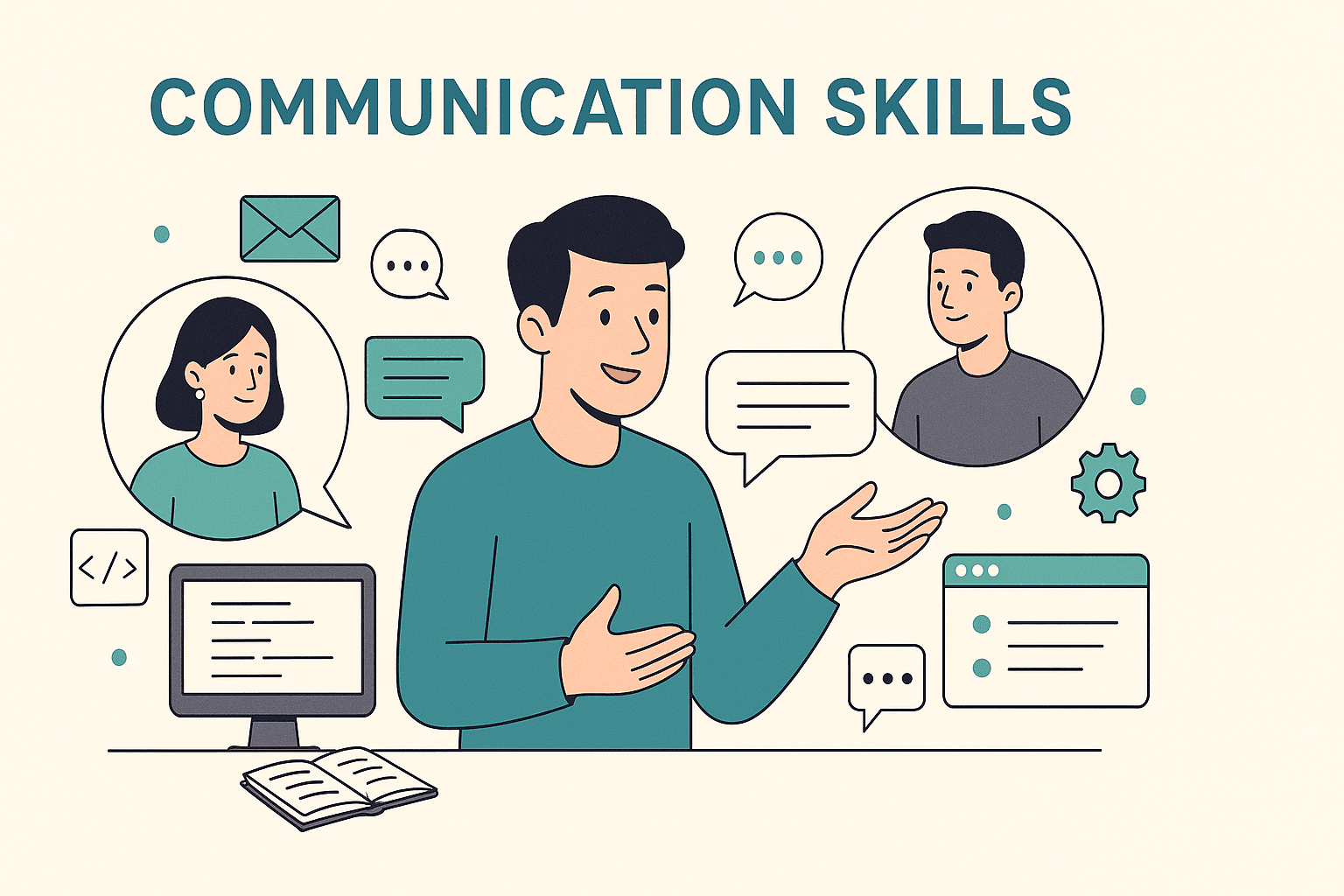
Clear communication is as crucial as clean code in the software engineering industry. Every project’s ability to succeed hinges on how well team members exchange ideas, information, and feedback.
Whether you’re producing documentation, introducing a new feature, or explaining a complicated bug, being able to communicate clearly keeps everyone on the same page and prevents deadlines from being missed.
Strong communication can take many different forms. It involves creating concise documentation that facilitates team members’ comprehension of your work without requiring constant back-and-forth communication.
During code reviews, it’s important to provide constructive criticism with an emphasis on solutions. Additionally, since tone and intent can be readily misinterpreted in emails, chat conversations, and online meetings, it’s important to retain professionalism and clarity.
Practice active listening to improve communication skills. Pay close attention to what people are saying, seek clarification when necessary, and be sure you understand before acting.
Combine it with concise written communication in which you clearly articulate your core point and provide pertinent data to back it up. These behaviors will eventually make you a more trustworthy and respected engineer, in addition to making you a better colleague.
2. Problem-Solving and Critical Thinking
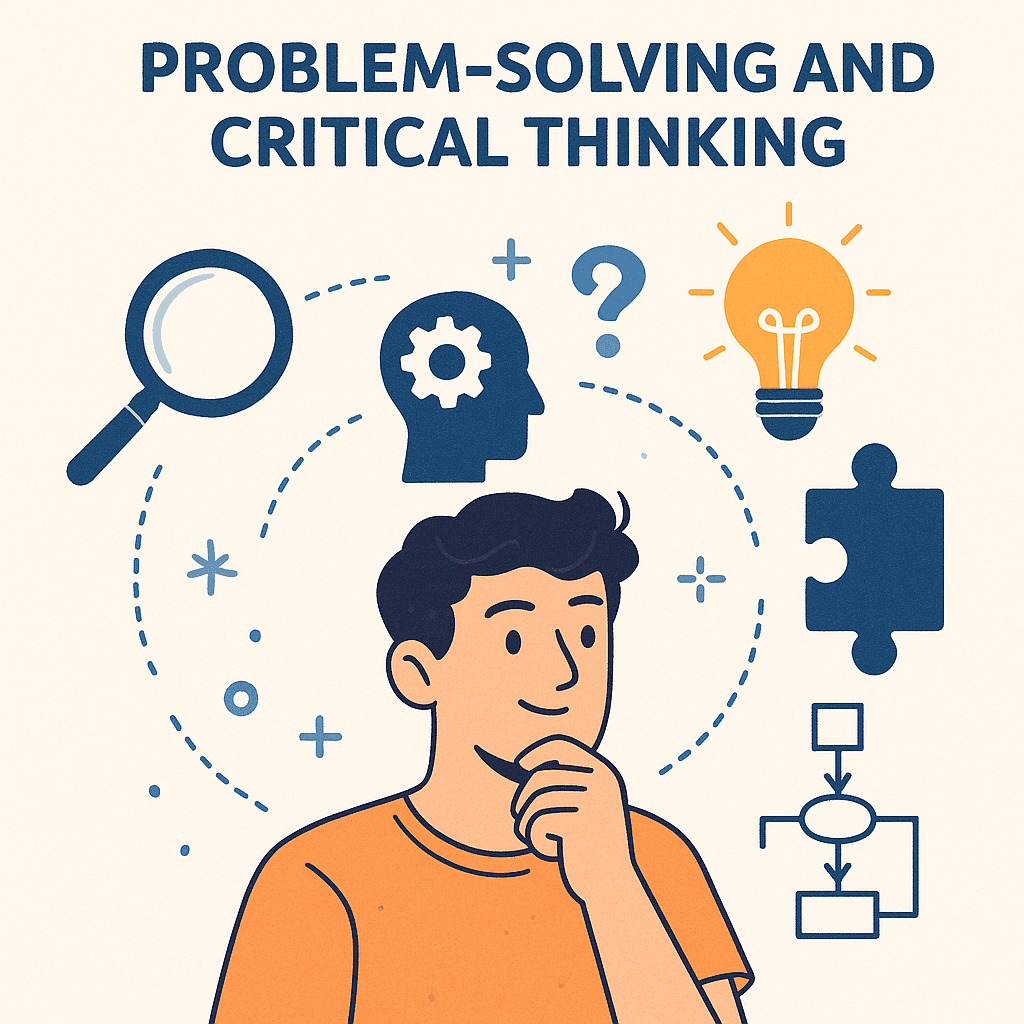
Software engineering is really about problem-solving, not just bug-fixing. Beyond simply fixing problems, the finest engineers delve deeper to identify the underlying reason, assess several strategies, and select the most effective, long-lasting solution.
This combination of critical thinking and problem-solving distinguishes truly good engineering from band-aid solutions.
Excellent developers take a structured and inquisitive approach to problems. Before acting, they assess the issue, obtain context, and take into account other viewpoints rather than diving right into the code.
Breaking large problems into smaller, testable hypotheses is a realistic method to improve problem-solving skills.
Choose one variable to test, gauge the result, and repeat the process rather than attempting to correct everything at once. This systematic approach lowers mistakes, increases comprehension, and produces more intelligent solutions.
In the end, critical thinking and problem-solving skills turn you into a true engineer who can navigate complexity and provide significant improvements in any system you create.
3. Adaptability and Continuous Learning
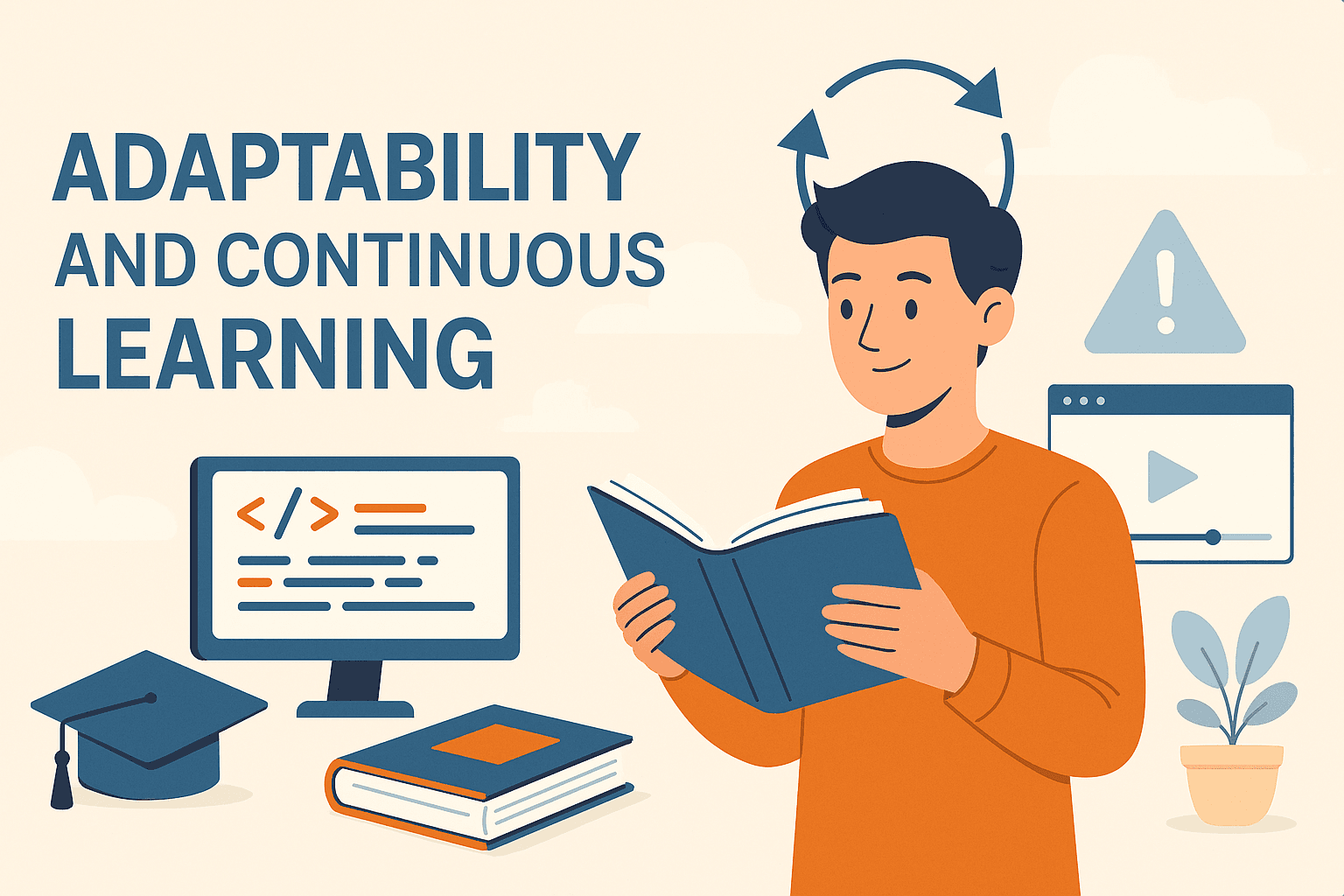
Adaptability is not merely desired in the rapidly evolving field of technology; it is necessary. Almost every day, new frameworks, APIs, and AI-powered tools are created, changing the way software is developed and used.
In addition to being relevant, engineers who can swiftly adapt to these changes become indispensable members of their teams and companies.
The ability to embrace change rather than resist it is a sign of adaptability. Flexibility enables you to advance with the industry rather than lag behind, whether you’re learning a new programming language, adapting to a different development process, or embracing an unfamiliar tech stack.
Adaptability and continuous learning go hand in hand. Whether it’s through online courses, open-source projects, reading documentation, or just playing with new tools, the most successful engineers develop a habit of learning. By doing this, they keep ahead of new trends and hone their problem-solving abilities.
To put it briefly, flexibility transforms uncertainty into a chance. Software engineers can succeed in a dynamic field by maintaining an open mind and a learner’s mindset.
Read Also:Will AI take over data science jobs? A balanced perspective
4. Time Management and Organization

Managing coding assignments, sprint deadlines, code reviews, and unforeseen defects all at once can make software engineering feel like a race against time. Even the most experienced developers may find it difficult to maintain quality and productivity without effective time management and organization.
Engineers can operate more efficiently, consistently meet deadlines, and prevent burnout from last-minute turmoil by mastering these abilities.
Planning and prioritization are the cornerstones of effective time management. Divide complex activities into manageable chunks and set reasonable deadlines.
Developers should avoid becoming bogged down in busywork by using tools like prioritization matrices, which help differentiate between critical and urgent activities.
The Pomodoro Technique, which involves working in concentrated 25-minute blocks interspersed with brief breaks, is a popular tactic among engineers.
This technique not only enhances focus but also lessens mental exhaustion, particularly while taking on challenging coding tasks.
Keeping your process and codebase organized is also important. Smoother cooperation and quicker project delivery are facilitated by the efficient use of version control systems like Git, the organization of project documentation, and the maintenance of clear commit messages.
In the end, excellent software engineers plan, organize, and continuously improve their time, just as they do their code. You can maintain both the project and your well-being on schedule by striking a balance between productivity and creativity with good time management and organizing practices.
5. Emotional Intelligence (EQ)
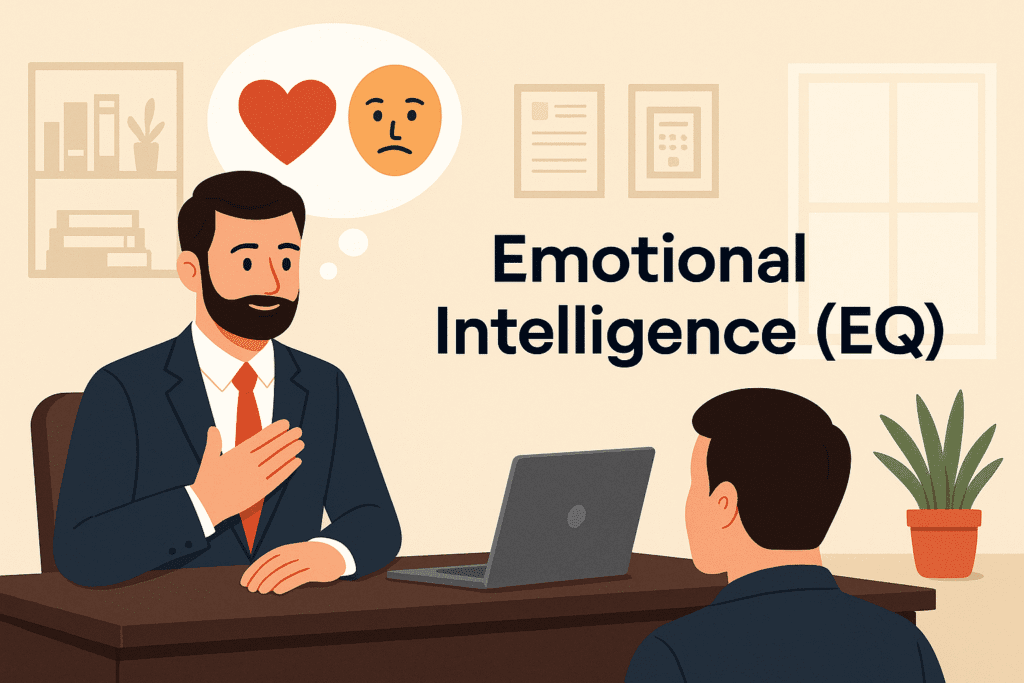
Emotional intelligence (EQ) is frequently the secret element that keeps teams healthy and productive in the field of software engineering, where deadlines are tight and projects might change overnight.
It is the capacity to recognize, control, and react to feelings, both your own and those of others. Emotional intelligence helps you create excellent teams, while technical abilities help you create amazing software.
Fundamentally, EQ begins with self-awareness, or the ability to identify your feelings, particularly while under stress.
Being conscious of your emotions enables you to react calmly rather than impulsively, whether it’s frustration during debugging or nervousness prior to a significant release.
Empathy, or knowing how your teammates feel and helping them through difficult times, is equally crucial.
When there is feedback and conflict, emotional intelligence also shows. An uncomfortable situation can be turned into a chance for personal development by accepting criticism with grace, providing feedback in a sensitive manner, and upholding respect during arguments.
EQ reminds us that software is ultimately created by people, for people, in a subject that is frequently thought of as completely logical.
In addition to producing superior code, engineers who blend technical proficiency with emotional intelligence foster more positive, cooperative work cultures where everyone can flourish.
Read Also: Building A Career in AI: Skills and Certifications Needed
6. Leadership and Mentorship
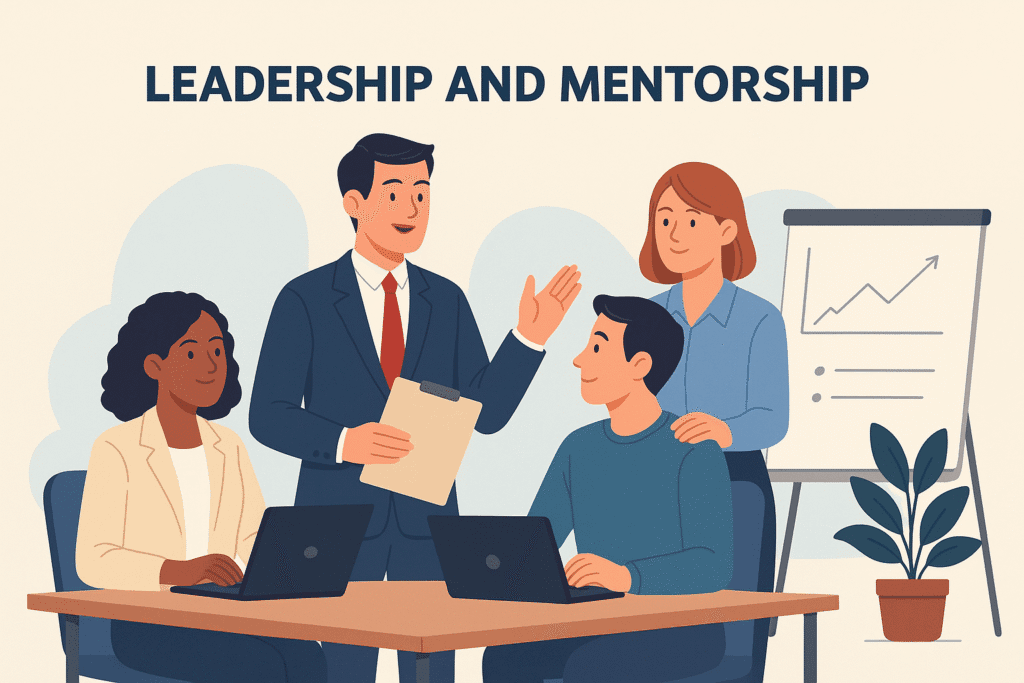
In software engineering, leadership isn’t just for someone with the title “manager“; it also involves taking the initiative, mentoring others, and leading by example.
Strong leadership and mentoring abilities can improve team performance, whether you’re overseeing a small project, coaching a junior developer, or organizing a release.
Empathy and trust are qualities of great technical leaders. They do more than just give assignments; they also listen, comprehend difficulties, and foster an atmosphere where everyone feels appreciated and supported.
Understanding that every team member learns and operates differently and modifying your strategy to maximize their potential are key components of empathy-driven leadership.
People naturally become more involved, productive, and creative when they feel valued and trusted.
Another effective component of leadership is mentoring. It’s about giving advice, imparting knowledge, and assisting people in developing their professions.
Imagine, for instance, an experienced developer mentoring a new intern through a challenging release cycle, providing guidance on practical problem-solving techniques, constructive code reviews, and explanations of design decisions.
This experience enhances the team’s long-term capabilities in addition to the intern’s skill set.
Effective leaders can also communicate vision and clarity, which is especially important while working under tight deadlines or ambiguity. They remain calm under pressure, make intelligent choices, and keep the team focused on the same goals.
In short, leadership and mentorship in software engineering are about more than just project management; they are about empowering others.
By instilling trust, encouraging growth, and leading with empathy, software engineers may affect not only the code they create but also the culture and success of their entire team.
7. Conflict Resolution
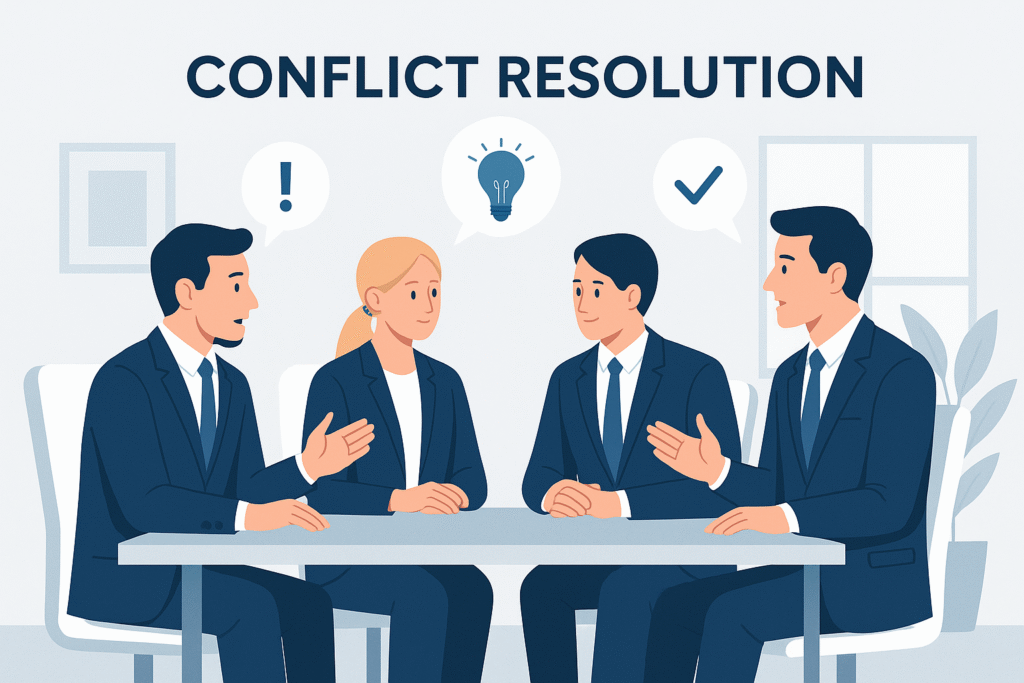
Conflicts are unavoidable in collaborative settings like software development teams, and that’s not always a bad thing.
When addressed constructively, disagreements over workflows, coding standards, or design decisions might actually result in better solutions. The secret is to handle these disputes with objectivity, professionalism, and decency.
Effective conflict resolution begins with remaining objective. Instead of reacting emotionally or defending personal beliefs, focus on the problem, not the person.
For example, if two developers dispute whether to utilize microservices or a monolithic design, change the focus from “who’s right” to “what’s best for the project.” This reframing keeps discussions productive and prevents tensions from rising.
Aiming for win-win solutions is another crucial idea. Excellent engineers are aware that teamwork and compromise frequently yield better outcomes than strictly adhering to one strategy.
Teams can come to a consensus without anyone feeling disregarded or underappreciated by attentively listening to all points of view and considering alternate ideas.
Discussions should always be guided by facts. Instead of depending on your own preferences or presumptions, make decisions based on statistics, standards, and actual proof. Arguments that are based on logic and openness foster trust and improve decision-making.
Turning disagreement into progress is the ultimate goal of dispute resolution. In addition to strengthening their teams, engineers who resolve conflicts peacefully and productively contribute to the development of a culture that values candid communication and a range of viewpoints.
Over time, that is what fosters creativity and creates strong, productive teams.
8. Teamwork and Collaboration

Software development is typically a collaborative endeavor that relies heavily on teamwork. Outstanding software engineers are adept at collaborating with designers, testers, product managers, and other developers to transform concepts into dependable, user-friendly products.
Success frequently depends more on how well a team works together than on any one person’s brilliance, whether it’s coming up with new features or fixing bugs under pressure.
Mutual respect and common objectives are the foundation of a strong team. Every position offers a different viewpoint: managers match the project with business requirements, testers guarantee quality, and designers concentrate on user experience.
The team works best when everyone feels appreciated and heard. In addition to fostering trust, peer support, such as assisting a colleague in troubleshooting a problem or examining a challenging pull request, also increases group knowledge.
Collaboration is easier than ever thanks to modern tools. Jira facilitates effective task and sprint tracking, Slack allows for immediate communication, and GitHub simplifies version management and team contributions.
A collection of people becomes a high-performing development team through the spirit of cooperation and openness, not just the tools.
Essentially, every successful endeavor is powered by teamwork. When software engineers work together well, they create stronger, more creative teams in addition to producing better products.
9. Continuous Learning

Since change is the only thing that is constant in technology, one of the most effective soft skills a software engineer can possess is continuous learning.
Almost every month, new tools appear, frameworks are updated, and languages change. You can stay ahead of the market by maintaining your curiosity and dedication to studying.
Learning new programming languages and tools is only one aspect of continuous learning. It also involves developing your communication, teamwork, and thinking skills.
The finest engineers strike a balance between technical proficiency and behavioral development, enhancing their ability to guide conversations, respond to criticism, or tackle challenging issues.
To put it another way, they learn more than simply how to code; they also learn how to collaborate more effectively.
Embracing feedback is a key component of this growth mentality. Use criticism as a guide to get better rather than taking it personally. Peer talks, code reviews, and retrospectives are all excellent ways to improve your abilities and viewpoint.
Make learning a habit by enrolling in online courses, reading developer blogs, contributing to open-source projects, or researching cutting-edge fields like cloud automation, cybersecurity, or artificial intelligence. A weekly commitment of even one hour to structured learning can make a significant difference.
In the end, smart engineers become lifelong innovators through constant learning. You will not only be able to adjust to change but also contribute to the future of software development by remaining inquisitive, receptive, and eager to change.
Read Also: 8 Soft Skills Every Data Scientist Needs to Succeed
10. Growth Mindset and Curiosity
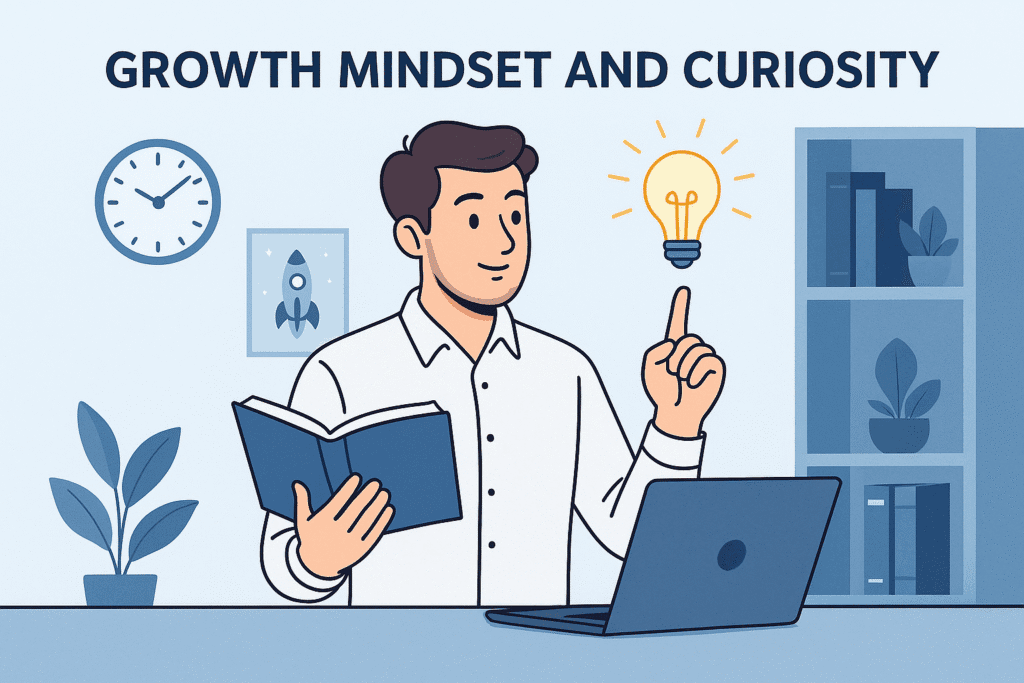
Errors are unavoidable in software engineering, but how you handle them determines how far you can go. Errors and difficulties are viewed by engineers with a growth mindset as opportunities to learn, grow, and innovate rather than as failures.
This mindset fosters resilience, innovation, and ongoing progress—qualities that are crucial in a field that is changing more quickly than ever.
Adopting a growth mindset is accepting that skills and knowledge can always be developed. Instead of blaming others or giving up when a deployment fails or a piece of code breaks, outstanding engineers examine what went wrong, draw lessons from it, and move on.
Every debugging session, performance problem, and setback is an opportunity to hone your technical skills and approach to problem-solving.
This combination of open-mindedness and curiosity enables you to see the whole picture, including how innovation actually occurs and how each component of the software ecosystem interacts with the others.
In short, curiosity keeps you motivated, and a growth mindset keeps you learning. When taken as a whole, they turn you from someone who merely produces code into someone who constantly develops, innovates, and takes the lead in the ever-evolving field of software engineering.
Conclusion
It needs the right combination of brains and behavior to succeed in software engineering, not just technical prowess. While efficient coding is vital, a great engineer is really defined by their ability to cooperate, communicate, adapt, and learn new things throughout their career.
The soft skills we’ve discussed, such as teamwork, communication, emotional intelligence, and flexibility, are what turn competent developers into outstanding professionals. These are the abilities that enable you to manage challenging projects, boost team trust, and produce products that actually have an impact.
FAQ
What are the most important soft skills for software engineers?
Communication, teamwork, problem-solving, flexibility, emotional intelligence, time management, and a growth mindset are among the most crucial soft skills. These enable engineers to work together more successfully and produce better outcomes.
Why do software engineers need communication skills?
Effective communication guarantees that concepts, specifications, and input are comprehended by all teams. It lessens miscommunication, expedites progress, and supports the upkeep of solid bonds with clients and coworkers.
How can developers improve their soft skills?
Seeking feedback, actively listening, participating in team discussions, assuming leadership roles in projects, and continuing learning through mentoring and cooperation are all ways that developers can get better.
Are soft skills more valuable than coding in tech jobs?
Both are necessary. While technical abilities help you land a job, soft skills are more important for long-term growth, team leadership, and adaptability. Strong coding abilities and good interpersonal skills are balanced by the greatest engineers.
What are some examples of soft skills in real-world software projects?
Managing time during sprints, training junior developers, settling issues during code reviews, sharing updates at Agile meetings, and swiftly adjusting to new technologies or project modifications are a few examples.
Share Now

More Articles
Real-World Machine Learning Use Cases That Boost Revenue
Best Generative AI Courses On Coursera That Explain Real-World Applications
Entry-Level Data Science Jobs: What Recruiters Really Want

As an engineer with a passion for learning and sharing knowledge, I created CourseKart.online to help students, professionals, and lifelong learners choose the best online courses. With so many options available, finding the right one can be overwhelming. My goal is to simplify that process by offering insights, reviews, and recommendations on the top online learning resources. I hope my posts inspire you to keep growing, learning, and exploring new opportunities.
Discover more from coursekart.online
Subscribe to get the latest posts sent to your email.